91. Leo Tolstoy, Russia, (1828-1910), Anna Karenina;

The novel is divided into eight parts. The novel begins with one of its most quoted lines, "Happy families are all alike; every unhappy family is unhappy in its own way."
Part 1 introduces the character Prince Stepan Arkadyevitch Oblonsky, known as "Stiva", a civil servant who has been unfaithful to his wife Darya Alexandrovna, known as "Dolly". Stiva's affair shows an amorous personality which he cannot seem to suppress. Stiva summons his married sister, Anna Karenina, from St. Petersburg to persuade Dolly not to leave him.
Upon arriving at Moscow, a railway worker accidentally falls in front of a train and is killed, which Anna declares to be an "evil omen". Meanwhile, Stiva's childhood friend Konstantin Dmitrievich Levin arrives in Moscow to offer his hand in marriage to Dolly's younger sister Ekaterina Alexandrovna Shcherbatsky, known as "Kitty". The passionate, restless but shy aristocratic landowner lives on an estate which he manages. Kitty turns him down, expecting a marriage offer from army officer Count Alexei Kirillovich Vronsky. Despite his fondness for Kitty, Vronsky has no intention of marrying her. He soon falls in love with Anna after he meets her at the Moscow train station and later dances the mazurkawith her at a ball.
Anna, shaken by her response and animation to Vronsky, returns at once to St. Petersburg. Vronsky follows her on the same train. Levin returns to his estate farm, abandoning any hope of marriage, and Anna returns to her husband Alexei Alexandrovich Karenin, a senior government official, and their son Sergei ("Seriozha") in Petersburg.

Tatiana Samoilova as Anna in the 1967 Soviet screening of Tolstoy's novel.
In part 2, Karenin scolds Anna for talking too much with Vronsky, but after a while she returns Vronsky's affections, and becomes pregnant with his child. Anna shows anguish when Vronsky falls from a racehorse, making her feelings obvious in society and prompting her to confess to her husband. This attraction appears repeatedly in the book through the form of a "What if" question.
When Kitty learns that Vronsky prefers Anna over her, she turns ill. Two doctors examine her, and together they decide she should travel abroad to recover. She goes to a resort at a Germanspring to recover from the shock. There she briefly becomes extremely pious, but decides that she can't retain that level of piety without deceiving herself.
Part 3 examines Levin's life on his rural farming estate, a setting closely tied to Levin's spiritual thoughts and struggles. Throughout this part, Levin wrestles with the idea of falseness, wondering how he should go about ridding himself of it, and criticizing what he feels is falseness in others.
Dolly also meets Levin, and attempts to revive his feelings for Kitty. Dolly seems to have failed, but a chance sighting of Kitty makes Levin realize he still loves her. Back in Petersburg, Karenin exasperates Anna by refusing to separate with her, and threatens not to let her see their son Seriozha ever again if she leaves or misbehaves, exactly what Vronsky asks her to do.
By part 4 however, Karenin finds the situation intolerable and begins seekingdivorce. Anna's brother Stiva argues against it and persuades Karenin to speak with Dolly first. Again, Dolly seems to be unsuccessful, but Karenin changes his plans after hearing that Anna is dying in childbirth. At her bedside, Karenin forgives Vronsky, who in remorse attempts suicide.
However, Anna recovers, having given birth to a daughter she names Anna ("Annie"). Stiva finds himself pleading on her behalf for Karenin to divorce. Vronsky at first plans to flee to Tashkent, but changes his mind after seeing Anna, and they leave for Europe without obtaining a divorce after all. Much more straightforward is Stiva's matchmaking with Levin: a meeting he arranges between Levin and Kitty results in their reconciliation and betrothal.
In part 5, Levin and Kitty marry. A few months later, Levin learns that his brother Nikolai is dying. The couple go to him, and Kitty nurses him until he dies, while also discovering she is pregnant. In Europe, Vronsky and Anna struggle to find friends who will accept them and pursue activities that will amuse them, but they eventually return to Russia.
Karenin is comforted – and influenced – by the strong-willed Countess Lidia Ivanovna, an enthusiast of religious and mystic ideas fashionable with the upper classes, who counsels him to keep Seriozha away from Anna. However, Anna manages to visit Seriozha unannounced on his birthday, but is discovered by the furious Karenin, who had told their son that his mother was dead. Shortly afterward, she and Vronsky leave for the country.
In part 6, Dolly visits Anna. At Vronsky's request, she asks Anna to resume seeking a divorce from Karenin. Yet again, Dolly seems unsuccessful; but when Vronsky leaves for several days of provincial elections, a combination of boredom and suspicion convinces Anna she must marry Vronsky. So she writes to Karenin, and leaves with Vronsky for Moscow.
In part 7, the Levins are in Moscow for Kitty's benefit as she gives birth to a son. Stiva, while seeking Karenin's commendation for a new job, again asks him to grant Anna a divorce; but Karenin's decisions are now governed by a "clairvoyant" – recommended by Lidia Ivanovna – who apparently counsels him to decline.
Anna and Vronsky become increasingly bitter towards each other.They plan to return to the country, but in a jealous rage Anna leaves early, and in a parallel to part 1, commits suicide by throwing herself in the path of a train. (Tolstoy reportedly was inspired to write Anna Karenina by reading a newspaper report of such a death.)
Part 8 continues the story after Anna's death. Stiva gets the job he wanted, and Karenin takes custody of Annie. Some Russian volunteers, including Vronsky, who does not plan to come back, leave to help in the Serbian revolt that has just broken out against the Turks (see also History of Serbia, 1876). And in the joys and fears of fatherhood, Levin at last develops faith in the Christian God.
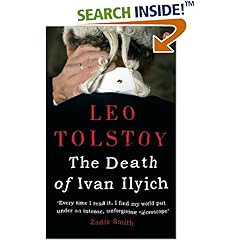
92. Leo Tolstoy, Russia, (1828-1910), The Death of Ivan Ilyich and Other Stories
93. Anton P. Chekhov, Russia, (1860-1904), Selected Stories

Chekkov
94. Thousand and One Nights = Chuyện Nga`n Lẻ Một Đêm,India/Iran/Iraq/Egypt, (700-1500).

Queen Scheherazade tells her stories to King Shahryar.
The Book of One Thousand and One Nights (Arabic: كتاب ألف ليلة و ليلة Kitāb 'Alf Layla wa-Layla, Persian: هزار و یک شب Hazār-o Yak Šab; also known as The Book of a Thousand Nights and a Night, One Thousand and One Nights, 1001 Arabian Nights, Arabian Nights, The Nightly Entertainments or simply The Nights) is a medieval collection of stories compiled over thousands of years by various authors, translators and scholars. Though an original manuscript has never been found several versions date the collection's genesis to somewhere between 800-900 AD.
Scholars suggest that the collection was greatly influenced by Arabic, Persian, Indian, ancient Greek and even Chinese folktales though starting in the 18th century translators began incorporating tales that were not in the original.
The unclear history of the Nights makes it one of world literature's most debated over and puzzling pieces.
What is common throughout all of the editions of the Nights is the initial frame story of Shahryar and Scheherazade and the framing device incorporated throughout the tales themselves. This frame tale is also believed to be first found in the ancient Persian story collection Hazār Afsānah. No physical evidence of Hazar Afsanah exists, however, nor is there a contemporary version of it though the collection is mentioned several times in historical documents.
The main frame story concerns a king and his new bride. The king, Shahryar, upon discovering his ex-wife's infidelity executes her and then declares all women to be unfaithful. He begins to marry a succession of virgins only to execute each one the next morning.
Scheherazade agrees to marry him and each night, beginning on the night of their marriage, she tells the king a tale but does not end it so that the king keeps her alive in order to hear the next tale.
The stories proceed from this original tale and fold in among themselves, some are frames within other frames while others begin and end on their own accord. Some versions, including early ones, contain only a few hundred tales while others include either 1001 or more stories and "nights."
Well known stories from the Nights include Aladdin, Ali Baba and the Forty Thieves, and The Seven Voyages of Sinbad the Sailor.
95. Mark Twain, United States, (1835-1910), The Adventures of Huckleberry Finn

Twain initially conceived of the work as a companion to The Adventures of Tom Sawyer that would follow Huck Finn through adulthood. Beginning with a chapter he had deleted from the earlier novel, Twain began work on a manuscript he originally titled Huckleberry Finn's Autobiography. Twain worked on the manuscript off and on for the next several years, ultimately abandoning his original plan of following Huck's development into adulthood. Upon completion, the novel's title closely paralleled its predecessor's: "Adventures of Huckleberry Finn (Tom Sawyer's Comrade)" [2]
Unlike The Adventures of Tom Sawyer, Twain's Adventures of Huckleberry Finndoes not have the definite article "the" as a part of its proper title. Writer Philip Young has hypothesized that this absence represents the fundamentally uncompleted nature of Huck's adventures -- while Tom's adventures were completed (at least at the time) at the end of his novel, Huck's narrative ends with his stated intention to head West

Mark Twain
96. Valmiki, India, (c. 300 BC), Ramayana
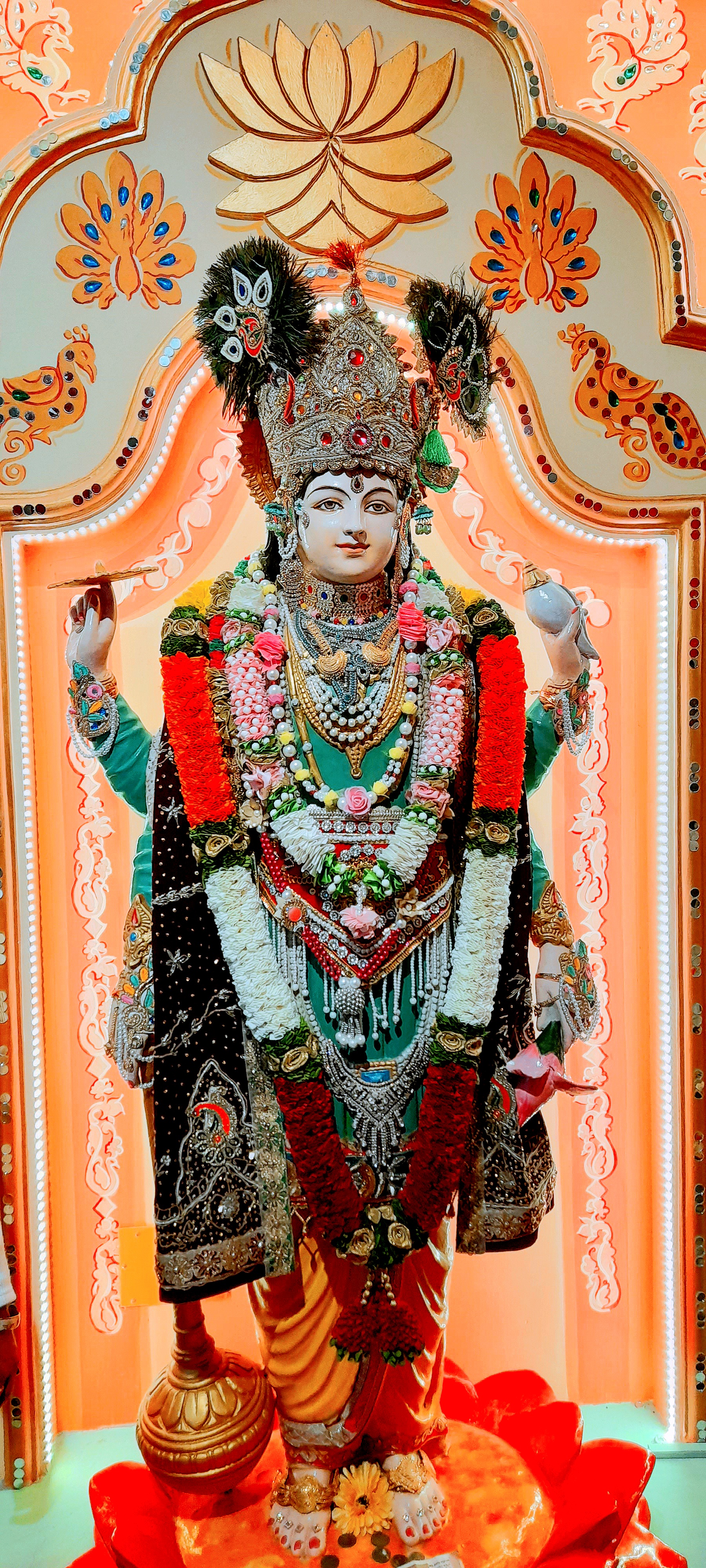
The Rāmāyaṇa (Devanāgarī: रामायण) is an ancient Sanskritepic attributed to the poet Valmiki and is an important part of the Hindu canon (smṛti). The nameRāmāyaṇa is a tatpurusa compound of Rāma and ayana "going, advancing", translating to "the travels of Rāma".[1] The Rāmāyaṇa consists of 24,000 verses[2] in seven cantos (kāṇḍas) and tells the story of a prince, Rama ofAyodhya, whose wife Sita is abducted by the demon (Rākshasa) king of Lanka,Rāvana.
In its current form, the Valmiki Ramayana is dated variously from 500 BCE to 100 BCE, or about co-eval to early versions of the Mahabhārata.[3] As with most traditional epics, since it has gone through a long process of interpolations and redactions, it is impossible to date it accurately. The Rāmāyana had an important influence on later Sanskrit poetry, primarily through its establishment of the Sloka meter. But, like its epic cousin Mahābhārata, the Rāmāyana is not just an ordinary story. It contains the teachings of ancient Hindu sages and presents them through allegory in narrative and the interspersion of the philosophical and the devotional. The characters of Rama, Sita, Lakshmana, Bharata, Hanumān and Rāvana (the villain of the piece) are all fundamental to the cultural consciousness of India.
One of the most important literary works on ancient India, the Ramayana has had a profound impact on art and culture in the Indian Subcontinent andSoutheast Asia. The story of Rama also inspired a large amount of latter-day literature in various languages, notable among which are the works of the sixteenth century Hindi poet Tulsidas and the Tamil poet Kambar of the 13th century.
The Ramayana is not just a Hindu religious tale. Starting from the 8th century, the colonisation of Southeast Asia by Indians began. Several large empires like the Khmers, the Majapahits, the Sailendras, the Champas and Sri Vijaya were established. Because of this, the Ramayana became popular in Southeast Asia and manifested itself in text, temple architecture and performance, particularly in Indonesia (Java, Sumatra, Bali and Borneo), Thailand, Cambodia, Laos,Malaysia, Myanmar, Philippines and Vietnam.
- ^ Note that the cerebral ṇ is due to infection by the word-initial r, seesandhi..
- ^ About 480,002 words, or a quarter of the length of the full text of the Mahabharata, or about four times the length of the Iliad.
- ^ Goldman, Robert P., The Ramayana of Valmiki: An Epic of Ancient Indiapp. 23

Aeneas flees burning Troy, Federico Barocci, 1598 Galleria Borghese, Rome
The Aeneid (IPAEnglish pronunciation: [əˈniːɪd]; in Latin Aeneis, pronounced [aɪˈne.ɪs] — the title is Greek in form: genitive case Aeneidos): is a Latinepicwritten by Virgil in the 1st century BC (between 29 and 19 BC) that tells thelegendary story of Aeneas, a Trojan who travelled to Italy where he became the ancestor of the Romans. It is written in dactylic hexameter. The first six of the poem's twelve books tell the story of Aeneas' wanderings from Troy to Italy, and the poem's second half treats the Trojans' ultimately victorious war upon the Latins, under whose name Aeneas and his Trojan followers are destined to be subsumed.
The hero Aeneas was already known to Greco-Roman legend and myth, having been a character in the Iliad; Virgil took the disconnected tales of Aeneas' wanderings, his vague association with the foundation of Rome and a personage of no fixed characteristics other than a scrupulous piety, and fashioned this into a compelling founding myth or nationalist epic that at once tied Rome to the legends of Troy, glorified traditional Roman virtues and legitimized the Julio-Claudian dynasty as descendants of the founders, heroes and gods of Rome and Troy.
98. Walt Whitman, United States, (1819-1892), Leaves of Grass

This book is notable for its delight in and praise of the senses, during a time when such candid displays were considered immoral. Where much previous poetry, especially English, relied on symbolism, allegory, and meditation on thereligious and spiritual, Leaves of Grass (particularly the first edition) exalted thebody and the material world. Influenced by the Transcendentalist movement, itself an offshoot of Romanticism, Whitman's poetry praises nature and the individual human's role in it. However, Whitman does not diminish the role of themind or the spirit; rather, he elevates the human form and the human mind, deeming both worthy of poetic praise.
99. Virginia Woolf, England, (1882-1941), Mrs. Dalloway To the Lighthouse

The novel follows Clarissa Dalloway throughout a single day in post-Great War England in a stream of consciousness style narrative. Constructed out of two short stories that Woolf had previously written ("Mrs Dalloway in Bond Street" and her unfinished "The Prime Minister") the basic story is that of Clarissa's preparations for a party she is to host that evening. Using the interior perspective of the novel, Woolf moves back and forth in time, and in and out of the various characters' minds to construct a complete image, not of just Clarissa's life, but of inter-war social structure.
Because of structural and stylistic similarities, Mrs Dalloway is commonly thought to be a response to James Joyce's Ulysses, a text that is commonly hailed as one of the greatest novels of the Twentieth Century. Woolf herself derided Joyce's masterpiece, even though Hogarth Press, run by her and her husband Leonard, initially published the novel in England. Fundamentally, however, Mrs Dalloway treads new ground and seeks to portray a different aspect of the human experience.
Mrs Dalloway is possibly Woolf's most well-known novel, owing in part to the recent popularization by Michael Cunningham's novel, The Hours, and Stephen Daldry's movie of the same name.
A film version of Mrs Dalloway was made in 1997 by Dutchfeminist film directorMarleen Gorris. It was adapted from Woolf's novel by British actress Eileen Atkins and starred Vanessa Redgrave in the title role. The cast includedNatascha McElhone, Rupert Graves, Michael Kitchen, Alan Cox, and Sarah Badel.
100. Marguerite Yourcenar, France, (1903-1987), Memoirs of Hadrian

Memoirs of Hadrian is a novel by the FrenchwriterMarguerite Yourcenardescribing the life and death of the Roman EmperorHadrian. The book was published in France in French in 1951 with the title Mémoires d'Hadrien, and was an immediate success, meeting with enormous critical acclaim. The real Hadrian did pen an autobiography, but it has been lost to history.
The book takes the form of a letter to Hadrian's cousin and eventual successor "Mark" — Marcus Aurelius. The emperor meditates on military triumphs, love ofpoetry and music, philosophy, and his passion for his lover Antinous, all in a manner not inconsisent with Gustave Flaubert's "melancholy of the antique world."
Yourcenar noted, in her own postscript "Carnet de note" to the original edition that she had partially chosen Hadrian as the subject of the novel as he had lived in a period of time, the 2nd century, when the old (Roman) gods were no longer believed in, but the new religion to come (Christianity) was not yet established. This intrigued her for the obvious parallels to her own post-war European world. The novel is, indeed, remarkable for presenting a materialist interpretation of existence quite distinct from the manner in which that term has properly been understood in the European philosophical tradition.

Không có nhận xét nào:
Đăng nhận xét