100 Tác Phẩm Văn Học (Tiểu Thuyết, Thơ ca) Hay Nhất Của Mọi Thời Đại
The top 100 books of all time
Full list of the 100 best works of fiction, alphabetically by author, as determined from a vote by 100 noted writers from 54 countries as released by the Norwegian Book Clubs. Don Quixote was named as the top book in history but otherwise no ranking was provided .
Năm 2006,
100 nhà văn nổi tiếng của 54 quốc gia đã bình chọn ra 100 tiểu thuyết hay nhất mọi thời đại.
Don Quixote của Miguel de Cervantes Saavedra (được xuất bản hai phần vào năm 1605 và 1615) nhận được hơn 50% số phiếu nên được chọn là tác phẩm xuất sắc nhất trong lịch sử, trong khi các cuốn còn lại không được xếp hạng được liệt kê theo thứ tự tên tác giả, quốc gia, năm sinh năm mất và tên tác phẩm, như sau:
1. Chinua Achebe, Nigeria, (b. 1930), Things Fall Apart
Năm 2006,
100 nhà văn nổi tiếng của 54 quốc gia đã bình chọn ra 100 tiểu thuyết hay nhất mọi thời đại.
Don Quixote của Miguel de Cervantes Saavedra (được xuất bản hai phần vào năm 1605 và 1615) nhận được hơn 50% số phiếu nên được chọn là tác phẩm xuất sắc nhất trong lịch sử, trong khi các cuốn còn lại không được xếp hạng được liệt kê theo thứ tự tên tác giả, quốc gia, năm sinh năm mất và tên tác phẩm, như sau:
1. Chinua Achebe, Nigeria, (b. 1930), Things Fall Apart
Things Fall Apart is a 1958 English-language novel byNigerian author Chinua Achebe. It is a staple book in schools throughout Africa and widely read and studied in English speaking countries around the world. It is seen as the archetypal modern African novel in English, and one of the first African novels written in English to receive global critical acclaim.
The novel concerns the life of Okonkwo, a leader and local wrestling champion throughout the nine villages of the Igbo ethnic group of Umuofia in Nigeria,Africa, his three wives, his children (mainly concerning his oldest son Nwoye and his favorite daughter Ezinma), and the influences of British colonialism and Christian missionaries on his traditional Igbo (archaically spelled "Ibo") community during an unspecified time in the late 1800s or early 1900s.
Literary history
Things Fall Apart is a milestone in African literature. It has achieved the status of the archetypal modern African novel in English[1], is read in Nigeria and the rest of Africa where it is a staple in schools[1]; it is read and studied widely in Europe and North America where hundreds of articles and scores of major studies have been written about it[1]; in India and Australia it is probably the most famous African novel[1]. It annually sells more than a million copies[citation needed] and is by far his most famous and award-winning work.
It was followed by two sequels, No Longer at Ease (1960, originally written as the second part of a larger work together with Things Fall Apart), and The Arrow of God (1964), both featuring the descendants of Okonkwo and the problems they face under colonialism. In addition, Achebe states that his two later novels, A Man of the People (1966) and Anthills of the Savannah (1987),while not featuring Okonkwo's descendants and indeed set in completely fictional African countries, are spiritual successors to the previous novels in chronicling African history.
Title origins
The title of the book comes from a poem, "The Second Coming," by William Butler Yeats, and is quoted in the frontpiece of the book:
Turning and turning in the widening gyre The falcon cannot hear the falconerThings fall apart, the centre cannot hold Mere anarchy is loosed upon the world. Yeats wrote "The Second Coming" in the belief that Christianity was coming to an end after two thousand years of dominance. Yeats believed history turned in cycles, and whatever was to follow, whatever "..rough beast, its hour come round at last, Slouches toward Bethlehem to be born" - the new cycle would be at odds with the old Christian ideas.[1] For Yeats the cycle of history was coming to an end, the world was old. For Achebe, the age of his traditional tribal culture was old and coming to an end, but Christianity was the new world .
Perspective
Things Fall Apart is written in third-person omniscient; the reader experiences the novel through an outside narrator. This way, the reader is able to not only see all that is happening, but the thoughts and motives of different characters as well. This allows dramatic ironyto occur. The perspective of the novel was appropriate because of the language barrier; Achebe has peppered pieces of the Igbo language throughout the book (with an appropriate glossary for the terms at the back of the novel) proving that it is too complex for a complete English translation. By having a third-person narrator, it allows the reader to understand what is going on at all times. Things Fall Apart has relatively limited dialogue, because the language is so different from English; in order to understand the whole plot the reader must know what the characters are thinking and their motives.
References to history
The events of the novel unfold around the turn of the 20th century.
The majority of the story takes place in the fictional village of Umuofia, located west of the actual Onitsha, on the east bank of the Niger River in Nigeria.[1]. The culture depicted was similar to where Achebe was born in Ogidi, whereIbo-speaking people lived together in groups of independent villages ruled over by "senior men" who had "taken titles". The customs described in the novel mirror closely those of the actual Onitsha people who lived nearby Ogidi and with whom Achebe was familiar.
When the British arrived in the first decades of the 20th century to "pacify" the region, they often practiced many of the brutal techniques described in the novel. As with the massacre at Abame, entire communities would be attacked and slaughtered in reprisals for offenses. Sometimes village elders would be invited to a meeting and then taken hostage or killed, just as happened to the village senior men in the novel. The British would appoint Africans from other parts of the country to carry out orders, known as kotma (an Ibo corruption of the English "court messenger"), who would, as described in the novel, abuse their position for personal gain.
Within forty years of the British arrival, by the time Achebe was born in 1930, the missionaries were well established. Achebe's father was among the first to be converted in Ogidi, around the turn of the century. Achebe himself was an orphan, so it can safely be said the character of Nwoye, who joins the church because of a conflict with his father, is not meant to represent the author. Achebe was raised by his grandmother, who was one of the last to take all three Ibo titles. His grandmother, far from opposed to Achebe's desire to become Christian, actually held a party to celebrate his conversion.
2. Hans Christian Andersen, Denmark, (1805-1875), Fairy Tales and Stories (Truyện cổ Andersen)
The novel concerns the life of Okonkwo, a leader and local wrestling champion throughout the nine villages of the Igbo ethnic group of Umuofia in Nigeria,Africa, his three wives, his children (mainly concerning his oldest son Nwoye and his favorite daughter Ezinma), and the influences of British colonialism and Christian missionaries on his traditional Igbo (archaically spelled "Ibo") community during an unspecified time in the late 1800s or early 1900s.
Literary history
Things Fall Apart is a milestone in African literature. It has achieved the status of the archetypal modern African novel in English[1], is read in Nigeria and the rest of Africa where it is a staple in schools[1]; it is read and studied widely in Europe and North America where hundreds of articles and scores of major studies have been written about it[1]; in India and Australia it is probably the most famous African novel[1]. It annually sells more than a million copies[citation needed] and is by far his most famous and award-winning work.
It was followed by two sequels, No Longer at Ease (1960, originally written as the second part of a larger work together with Things Fall Apart), and The Arrow of God (1964), both featuring the descendants of Okonkwo and the problems they face under colonialism. In addition, Achebe states that his two later novels, A Man of the People (1966) and Anthills of the Savannah (1987),while not featuring Okonkwo's descendants and indeed set in completely fictional African countries, are spiritual successors to the previous novels in chronicling African history.
Title origins
The title of the book comes from a poem, "The Second Coming," by William Butler Yeats, and is quoted in the frontpiece of the book:
Turning and turning in the widening gyre The falcon cannot hear the falconerThings fall apart, the centre cannot hold Mere anarchy is loosed upon the world. Yeats wrote "The Second Coming" in the belief that Christianity was coming to an end after two thousand years of dominance. Yeats believed history turned in cycles, and whatever was to follow, whatever "..rough beast, its hour come round at last, Slouches toward Bethlehem to be born" - the new cycle would be at odds with the old Christian ideas.[1] For Yeats the cycle of history was coming to an end, the world was old. For Achebe, the age of his traditional tribal culture was old and coming to an end, but Christianity was the new world .
Perspective
Things Fall Apart is written in third-person omniscient; the reader experiences the novel through an outside narrator. This way, the reader is able to not only see all that is happening, but the thoughts and motives of different characters as well. This allows dramatic ironyto occur. The perspective of the novel was appropriate because of the language barrier; Achebe has peppered pieces of the Igbo language throughout the book (with an appropriate glossary for the terms at the back of the novel) proving that it is too complex for a complete English translation. By having a third-person narrator, it allows the reader to understand what is going on at all times. Things Fall Apart has relatively limited dialogue, because the language is so different from English; in order to understand the whole plot the reader must know what the characters are thinking and their motives.
References to history
The events of the novel unfold around the turn of the 20th century.
The majority of the story takes place in the fictional village of Umuofia, located west of the actual Onitsha, on the east bank of the Niger River in Nigeria.[1]. The culture depicted was similar to where Achebe was born in Ogidi, whereIbo-speaking people lived together in groups of independent villages ruled over by "senior men" who had "taken titles". The customs described in the novel mirror closely those of the actual Onitsha people who lived nearby Ogidi and with whom Achebe was familiar.
When the British arrived in the first decades of the 20th century to "pacify" the region, they often practiced many of the brutal techniques described in the novel. As with the massacre at Abame, entire communities would be attacked and slaughtered in reprisals for offenses. Sometimes village elders would be invited to a meeting and then taken hostage or killed, just as happened to the village senior men in the novel. The British would appoint Africans from other parts of the country to carry out orders, known as kotma (an Ibo corruption of the English "court messenger"), who would, as described in the novel, abuse their position for personal gain.
Within forty years of the British arrival, by the time Achebe was born in 1930, the missionaries were well established. Achebe's father was among the first to be converted in Ogidi, around the turn of the century. Achebe himself was an orphan, so it can safely be said the character of Nwoye, who joins the church because of a conflict with his father, is not meant to represent the author. Achebe was raised by his grandmother, who was one of the last to take all three Ibo titles. His grandmother, far from opposed to Achebe's desire to become Christian, actually held a party to celebrate his conversion.
2. Hans Christian Andersen, Denmark, (1805-1875), Fairy Tales and Stories (Truyện cổ Andersen)
3. Jane Austen, England, (1775-1817), Pride and Prejudice = "Kiêu hãnh và định kiến"…
Pride and Prejudice, first published on 28 January1813, is the most famous ofJane Austen's novels and one of the first romantic comedies in the history of the novel.
Its manuscript was first written between 1796 and 1797, initially called First Impressions, but was never published under that title. Following revisions, it was first published on 28 January1813. Like both its predecessors, Sense and Sensibility, and Northanger Abbey, it was written in Steventon, Hampshire, where Austen lived in the rectory.
Plot summary
The novel opens with the famous line, "It is a truth universally acknowledged, that a single man in possession of a good fortune, must be in want of a wife.". The arrival of such a single man "of considerable fortune" in the neighbourhood greatly excites Mrs. Bennet. Mr. Bingley, the man in question, leased the Netherfield estate where he plans to temporarily settle with his two sisters, Miss Bingley and Mrs. Hurst, and his sister's husband, Mr. Hurst. Soon after moving in, Mr. Bingley and his party, which now includes his close friendFitzwilliam Darcy, attend a public ball in the village of Meryton. At first, Mr. Darcy is admired for his fine figure and income of £10,000 a year and is far more the subject of attention than Mr. Bingley. However, he is soon regarded contemptuously as the villagers become disgusted with his pride. This is brought home to the Bennet family when Elizabeth Bennet overhears Mr. Darcy decline Mr. Bingley's suggestion that he dance with her because she is not handsome enough to tempt him. Mr. Bingley, on the other hand, proves highly agreeable, dancing with many of the eligible ladies in attendance and showing his decided admiration for Jane Bennet. Eager to encourage this highly advantageous match, Mrs. Bennet attempts to push Jane and Mr. Bingley together at every opportunity.
Shortly after the ball, Mr. Collins—a cousin who, because of an entail, will inherit the Bennet estate—visits the family. Mr. Collins, a pompous buffoon of a clergyman whose idea of a pleasant evening is reading to his female cousins from Fordyce's Sermons, delights in dropping the name of his great patroness, Lady Catherine de Bourgh, with great frequency. Following Lady Catherine's imperious suggestion that he marry, Mr. Collins has decided to make amends for his role in the Bennets' future impoverishment by marrying one of his cousins. Mr. Collins proposes to Elizabeth but she refuses him point-blank. Although Mrs. Bennet tries to promote the marriage, Elizabeth, supported by her father, will not have him. Meanwhile, Elizabeth is introduced to Mr. Wickham, a pleasing, amiable officer in the regiment. Mr. Wickham informs her that he had known Mr. Darcy his entire life, but was dealt a serious wrong after the death of Mr. Darcy's father. After the tale is told, Elizabeth begins to harbour a strong prejudice against Mr. Darcy.
After Elizabeth rejects Mr. Collins, he hurriedly marries her best friend, Charlotte Lucas, and Elizabeth is invited to visit the newlyweds. While she is staying with them, Mr. Darcy visits his aunt, Lady Catherine de Bourgh, at the adjoining estate, Rosings. Elizabeth and Mr. Darcy are therefore thrown daily into each other's company. Elizabeth's charms eventually entrance Mr. Darcy, leading him to finally declare his love for her "against his own will" and his desire to marry her in spite of her objectionable family. Surprised and insulted by Mr. Darcy's high-handed method of proposing, as well as having recently learnt that Mr. Darcy convinced Mr. Bingley to sever ties with Jane and still contemptuous of Mr. Darcy's supposed wrongs against Mr. Wickham, Elizabeth refuses him in no uncertain terms, saying that he is "the last man in the world whom [she] could ever be prevailed on to marry." The next day, Mr. Darcy intercepts Elizabeth on her morning walk and hands her a letter before coldly taking his leave. In the letter, Mr. Darcy justifies his actions regarding his interference in Mr. Bingley and Jane's relationship, and reveals his history concerning Mr. Wickham and Mr. Wickham's true nature. The letter sheds a new light on Mr. Darcy's personality for Elizabeth and she begins to reconsider her opinion of him, particularly in the case of Mr. Wickham.
Later, while on holiday with her aunt and uncle, the Gardiners, Elizabeth is persuaded to visit nearby Pemberley, Mr. Darcy's estate, but only goes because she is told he is away. She is therefore mortified when she bumps into him unexpectedly while on a tour of the grounds; however, his altered behaviour towards her - distinctly warmer from their last meeting - and his polite and friendly manner towards her aunt and uncle begins to persuade Elizabeth that underneath his pride lies a true and generous nature. Her revised opinion of Mr. Darcy is supported through meeting his younger sister Georgiana, a gentle-natured and shy girl whom Mr. Darcy lovingly dotes upon.
Just as her relationship with Mr. Darcy starts to thaw, Elizabeth is horrified by news that, in her absence, her headstrong younger sister Lydia has attracted Mr. Wickham's attentions and eloped with him. When the family investigates, they learn that Mr. Wickham resigned his commission to evade gambling debts. When told of this by Elizabeth, Mr. Darcy takes it upon himself to find Mr. Wickham and bribe him into marrying Lydia, but keeps this secret from Elizabeth and her family. Elizabeth accidentally learns of Mr. Darcy's involvement from Lydia's careless remarks, later confirmed by Mrs. Gardiner. This final act completes a reversal in Elizabeth's sentiments, and she begins to regret having turned down Mr. Darcy's earlier proposal of marriage.
Lady Catherine discovers Mr. Darcy's feelings for Elizabeth, threatening her long cherished ambition for him to marry her own daughter. She pays Elizabeth an unannounced visit and brusquely tries to intimidate her into refusing such an engagement. Unfortunately, Catherine's visit serves to consolidate Elizabeth's intentions. Furthermore, Lady Catherine visits Mr. Darcy later, and relates the entire conversation to him, leading Mr. Darcy to the conviction that if he proposes to Elizabeth again, she may accept him. After ensuring that Mr. Bingley and Jane Bennet's relationship is rekindled, Mr. Darcy and Elizabeth become engaged.
The book ends with two marriages: Jane and Bingley's, as well as Darcy and Elizabeth's. Both couples live happily ever after.

Role of women in the 18th century
In late-18th-century England, women were relegated to secondary roles in society with respect to property and social responsibilities. For example, women were not permitted to visit new arrivals to the neighborhood (such as Mr. Bingley in Pride and Prejudice) until the male head of their household had first done so. Women were under enormous pressure to marry for the purpose of securing their financial futures and making valuable social connections for their families. Therefore, marriage, though romanticised, was in many ways a financial transaction and social alliance rather than a matter of love. Although Jane Austen did not condone loveless marriages (she stayed single all her life), she did approve of matches having equality in various respects, including wealth, social status, love and character. In Pride and Prejudice, wealth, social status, chastity (and the perception of chastity) and physical attractiveness are depicted as factors affecting a woman's chances for a good marriage.
Characters in Pride and Prejudice
Elizabeth (Lizzy) Bennet is the core of the family. Elizabeth is the second of Mr. and Mrs. Bennet's five daughters, and is an intelligent, bold and attractive twenty year old when the story begins. In addition to being her father's favourite, Elizabeth is characterized as a sensible yet stubborn woman. Misled by Mr. Darcy's cold outward behaviour, Elizabeth originally holds Mr. Darcy in contempt. However, she finds that Mr. Darcy improves on acquaintance, more so than she would expect.
Fitzwilliam Darcy is the central male character and Elizabeth's second love interest in the novel. He is an intelligent, wealthy, extremely handsome and reserved 28-year-old man, who often appears haughty or proud to strangers but possesses an honest and kind nature underneath. Initially, he considers Elizabeth his social inferior, unworthy of his attention, but he finds that, despite his inclinations, he cannot deny his feelings for Elizabeth. His initial proposal of marriage is rejected because of his pride and Elizabeth's prejudice against him; however, at the end of the novel, after their relationship has blossomed, he is happily engaged to a loving Elizabeth.
Mr. Bennet is the father of Elizabeth Bennet and head of the Bennet family. His first name is never mentioned. An English gentleman with an estate inHertfordshire, he is married to Mrs. Bennet and has five daughters. Unfortunately, his property is entailed to a male descendant, meaning it can only be inherited by his closest male heir, Mr. Collins. Mr. Bennet is a very amiable man but he has a bitingly sarcastic humour. Mr. Bennet is a somewhat gentle and eccentric man who can only derive amusement from his "nervous" wife and three "silly" daughters--Mary, Kitty and Lydia. He is close to his eldest daughter Jane, but is particularly attached to his second eldest daughter Elizabeth. Both Jane and Elizabeth have won this approval due to possessing a greater amount of sense than their three sisters. Mr. Bennet prefers the solitude of his study, neglecting the raising of his children, which leads to near-disaster.
Its manuscript was first written between 1796 and 1797, initially called First Impressions, but was never published under that title. Following revisions, it was first published on 28 January1813. Like both its predecessors, Sense and Sensibility, and Northanger Abbey, it was written in Steventon, Hampshire, where Austen lived in the rectory.
Plot summary
The novel opens with the famous line, "It is a truth universally acknowledged, that a single man in possession of a good fortune, must be in want of a wife.". The arrival of such a single man "of considerable fortune" in the neighbourhood greatly excites Mrs. Bennet. Mr. Bingley, the man in question, leased the Netherfield estate where he plans to temporarily settle with his two sisters, Miss Bingley and Mrs. Hurst, and his sister's husband, Mr. Hurst. Soon after moving in, Mr. Bingley and his party, which now includes his close friendFitzwilliam Darcy, attend a public ball in the village of Meryton. At first, Mr. Darcy is admired for his fine figure and income of £10,000 a year and is far more the subject of attention than Mr. Bingley. However, he is soon regarded contemptuously as the villagers become disgusted with his pride. This is brought home to the Bennet family when Elizabeth Bennet overhears Mr. Darcy decline Mr. Bingley's suggestion that he dance with her because she is not handsome enough to tempt him. Mr. Bingley, on the other hand, proves highly agreeable, dancing with many of the eligible ladies in attendance and showing his decided admiration for Jane Bennet. Eager to encourage this highly advantageous match, Mrs. Bennet attempts to push Jane and Mr. Bingley together at every opportunity.
Shortly after the ball, Mr. Collins—a cousin who, because of an entail, will inherit the Bennet estate—visits the family. Mr. Collins, a pompous buffoon of a clergyman whose idea of a pleasant evening is reading to his female cousins from Fordyce's Sermons, delights in dropping the name of his great patroness, Lady Catherine de Bourgh, with great frequency. Following Lady Catherine's imperious suggestion that he marry, Mr. Collins has decided to make amends for his role in the Bennets' future impoverishment by marrying one of his cousins. Mr. Collins proposes to Elizabeth but she refuses him point-blank. Although Mrs. Bennet tries to promote the marriage, Elizabeth, supported by her father, will not have him. Meanwhile, Elizabeth is introduced to Mr. Wickham, a pleasing, amiable officer in the regiment. Mr. Wickham informs her that he had known Mr. Darcy his entire life, but was dealt a serious wrong after the death of Mr. Darcy's father. After the tale is told, Elizabeth begins to harbour a strong prejudice against Mr. Darcy.
After Elizabeth rejects Mr. Collins, he hurriedly marries her best friend, Charlotte Lucas, and Elizabeth is invited to visit the newlyweds. While she is staying with them, Mr. Darcy visits his aunt, Lady Catherine de Bourgh, at the adjoining estate, Rosings. Elizabeth and Mr. Darcy are therefore thrown daily into each other's company. Elizabeth's charms eventually entrance Mr. Darcy, leading him to finally declare his love for her "against his own will" and his desire to marry her in spite of her objectionable family. Surprised and insulted by Mr. Darcy's high-handed method of proposing, as well as having recently learnt that Mr. Darcy convinced Mr. Bingley to sever ties with Jane and still contemptuous of Mr. Darcy's supposed wrongs against Mr. Wickham, Elizabeth refuses him in no uncertain terms, saying that he is "the last man in the world whom [she] could ever be prevailed on to marry." The next day, Mr. Darcy intercepts Elizabeth on her morning walk and hands her a letter before coldly taking his leave. In the letter, Mr. Darcy justifies his actions regarding his interference in Mr. Bingley and Jane's relationship, and reveals his history concerning Mr. Wickham and Mr. Wickham's true nature. The letter sheds a new light on Mr. Darcy's personality for Elizabeth and she begins to reconsider her opinion of him, particularly in the case of Mr. Wickham.
Later, while on holiday with her aunt and uncle, the Gardiners, Elizabeth is persuaded to visit nearby Pemberley, Mr. Darcy's estate, but only goes because she is told he is away. She is therefore mortified when she bumps into him unexpectedly while on a tour of the grounds; however, his altered behaviour towards her - distinctly warmer from their last meeting - and his polite and friendly manner towards her aunt and uncle begins to persuade Elizabeth that underneath his pride lies a true and generous nature. Her revised opinion of Mr. Darcy is supported through meeting his younger sister Georgiana, a gentle-natured and shy girl whom Mr. Darcy lovingly dotes upon.
Just as her relationship with Mr. Darcy starts to thaw, Elizabeth is horrified by news that, in her absence, her headstrong younger sister Lydia has attracted Mr. Wickham's attentions and eloped with him. When the family investigates, they learn that Mr. Wickham resigned his commission to evade gambling debts. When told of this by Elizabeth, Mr. Darcy takes it upon himself to find Mr. Wickham and bribe him into marrying Lydia, but keeps this secret from Elizabeth and her family. Elizabeth accidentally learns of Mr. Darcy's involvement from Lydia's careless remarks, later confirmed by Mrs. Gardiner. This final act completes a reversal in Elizabeth's sentiments, and she begins to regret having turned down Mr. Darcy's earlier proposal of marriage.
Lady Catherine discovers Mr. Darcy's feelings for Elizabeth, threatening her long cherished ambition for him to marry her own daughter. She pays Elizabeth an unannounced visit and brusquely tries to intimidate her into refusing such an engagement. Unfortunately, Catherine's visit serves to consolidate Elizabeth's intentions. Furthermore, Lady Catherine visits Mr. Darcy later, and relates the entire conversation to him, leading Mr. Darcy to the conviction that if he proposes to Elizabeth again, she may accept him. After ensuring that Mr. Bingley and Jane Bennet's relationship is rekindled, Mr. Darcy and Elizabeth become engaged.
The book ends with two marriages: Jane and Bingley's, as well as Darcy and Elizabeth's. Both couples live happily ever after.
 | This image has been resized. Click this bar to view the full image. The original image is sized 700x453. |
Role of women in the 18th century
In late-18th-century England, women were relegated to secondary roles in society with respect to property and social responsibilities. For example, women were not permitted to visit new arrivals to the neighborhood (such as Mr. Bingley in Pride and Prejudice) until the male head of their household had first done so. Women were under enormous pressure to marry for the purpose of securing their financial futures and making valuable social connections for their families. Therefore, marriage, though romanticised, was in many ways a financial transaction and social alliance rather than a matter of love. Although Jane Austen did not condone loveless marriages (she stayed single all her life), she did approve of matches having equality in various respects, including wealth, social status, love and character. In Pride and Prejudice, wealth, social status, chastity (and the perception of chastity) and physical attractiveness are depicted as factors affecting a woman's chances for a good marriage.
Characters in Pride and Prejudice
Elizabeth (Lizzy) Bennet is the core of the family. Elizabeth is the second of Mr. and Mrs. Bennet's five daughters, and is an intelligent, bold and attractive twenty year old when the story begins. In addition to being her father's favourite, Elizabeth is characterized as a sensible yet stubborn woman. Misled by Mr. Darcy's cold outward behaviour, Elizabeth originally holds Mr. Darcy in contempt. However, she finds that Mr. Darcy improves on acquaintance, more so than she would expect.
Fitzwilliam Darcy is the central male character and Elizabeth's second love interest in the novel. He is an intelligent, wealthy, extremely handsome and reserved 28-year-old man, who often appears haughty or proud to strangers but possesses an honest and kind nature underneath. Initially, he considers Elizabeth his social inferior, unworthy of his attention, but he finds that, despite his inclinations, he cannot deny his feelings for Elizabeth. His initial proposal of marriage is rejected because of his pride and Elizabeth's prejudice against him; however, at the end of the novel, after their relationship has blossomed, he is happily engaged to a loving Elizabeth.
Mr. Bennet is the father of Elizabeth Bennet and head of the Bennet family. His first name is never mentioned. An English gentleman with an estate inHertfordshire, he is married to Mrs. Bennet and has five daughters. Unfortunately, his property is entailed to a male descendant, meaning it can only be inherited by his closest male heir, Mr. Collins. Mr. Bennet is a very amiable man but he has a bitingly sarcastic humour. Mr. Bennet is a somewhat gentle and eccentric man who can only derive amusement from his "nervous" wife and three "silly" daughters--Mary, Kitty and Lydia. He is close to his eldest daughter Jane, but is particularly attached to his second eldest daughter Elizabeth. Both Jane and Elizabeth have won this approval due to possessing a greater amount of sense than their three sisters. Mr. Bennet prefers the solitude of his study, neglecting the raising of his children, which leads to near-disaster.
4. Honore de Balzac, France, (1799-1850), Old Goriot

Le Père Goriot (English title: Old Goriot or Father Goriot) is an 1835novelwritten by the FrenchnovelistHonoré de Balzac. It is one of the series of novels to which Balzac gave the title of "La Comédie humaine" ("The Human Comedy"). Balzac’s own final draft of the novel divided it into six sections.
Le Père Goriot was written between 1834-1835 when Balzac was 35 years old, he often worked around the clock in marathon sessions. It first appeared in serialized form in Revue de Paris in the Fall of 1834 and in completed book form in 1835.
It is part of The Human Comedy, but as a stand-alone novel it represents Balzac's talents at their height in a complete form. Many of his novels were not always complete unto themselves requiring other works to tie together. Thus,Pere Goriot has been one of his most widely read novels, achieving such fame that the novels protagonist, "Rastignac", for the French, is synonymous with a bright young man determined to succeed - perhaps at any cost.
5. Samuel Beckett, Ireland, (1906-1989), Trilogy: Molloy,

The plot, what little there is of it, is revealed in the course of the two interior monologues that make up the book.
The first is by a former vagrant named Molloy, who is now living "in [his] mother's room" and writing to "speak of the things that are left, say [his] goodbyes, finish dying." He describes a journey he had taken some time earlier, before he came there, to find his mother. He walks in no certain direction, from town to anonymous town and across anonymous countryside, encountering a succession of bizarre characters: an elderly man with a stick; a policeman; a charity worker; a woman whose dog he kills, and who he falls in love with (her name is never completely determined: "a Mrs Loy... or Lousse, I forget, Christian name something like Sophie"); "a young old man"; a charcoal-burner living in the woods; and finally a character who takes him in, to the room.
The second is by a private detective by the name of Jacques Moran, who is given the task by his boss, the mysterious Youdi, of tracking down Molloy. He sets out, taking his recalcitrant son, also named Jacques, with him. They wander across the countryside, increasingly bogged down by the weather, decreasing supplies of food and Moran's suddenly failing body. Eventually, the son disappears, and it appears Moran is going mad (to judge by the bizarre "questions of a theological nature" that occur to him). He eventually struggles home, and writes the report of his mission.
6. Samuel Beckett, Ireland, (1906-1989), Trilogy: Malone Dies,

Malone Dies is a novel by Samuel Beckett. It was first published in 1951, inFrench, as Malone Meurt, and later translated into English by the author.
The second novel in Beckett's "Trilogy" (beginning with Molloy and ending withThe Unnamable), it can be described as the space between wholeness and disintegration, action and total inertia. Along with the other two novels that comprise the trilogy, it marked the beginning of Beckett's most significant writing, where the questions of language and the fundamentals of constructing a non-traditional narrative became a central idea in his work. One does not get a sense of plot, character development, or even setting in this novel, as with most of his subsequent writing (e.g., Three Texts for Nothing, Fizzles, and How It Is). Malone Dies can be seen as the point in which Beckett took another direction with his writing, where the bareness of consciousness played a huge part in all his subsequent writings.
7. Samuel Beckett, Ireland, (1906-1989), Trilogy: The Unnamable = Người không tên

The Unnamable is a 1953 novel by Samuel Beckett. It is the third and final entry in Beckett's "Trilogy" of novels, which also includes Molloy and Malone Dies. It was originally published in French as L'Innomable.
The Unnamable consists entirely of a disjointed monologue from the perspective of an unnamed (presumably unnamable) and immobile protagonist. There is no concrete plot or setting - and whether the other characters ("Mahood" and "Worm") actually exist or whether they are facets of the narrator himself is debatable.
The novel builds in its despairing tone until the ending, which is mainly comprised of very long run-on sentences. It closes with the phrase "I can't go on, I'll go on," which was later used as the title of an anthology of Beckett works.
8. Giovanni Boccaccio, Italy, (1313-1375), Decameron
Le Père Goriot (English title: Old Goriot or Father Goriot) is an 1835novelwritten by the FrenchnovelistHonoré de Balzac. It is one of the series of novels to which Balzac gave the title of "La Comédie humaine" ("The Human Comedy"). Balzac’s own final draft of the novel divided it into six sections.
Le Père Goriot was written between 1834-1835 when Balzac was 35 years old, he often worked around the clock in marathon sessions. It first appeared in serialized form in Revue de Paris in the Fall of 1834 and in completed book form in 1835.
It is part of The Human Comedy, but as a stand-alone novel it represents Balzac's talents at their height in a complete form. Many of his novels were not always complete unto themselves requiring other works to tie together. Thus,Pere Goriot has been one of his most widely read novels, achieving such fame that the novels protagonist, "Rastignac", for the French, is synonymous with a bright young man determined to succeed - perhaps at any cost.
5. Samuel Beckett, Ireland, (1906-1989), Trilogy: Molloy,
The plot, what little there is of it, is revealed in the course of the two interior monologues that make up the book.
The first is by a former vagrant named Molloy, who is now living "in [his] mother's room" and writing to "speak of the things that are left, say [his] goodbyes, finish dying." He describes a journey he had taken some time earlier, before he came there, to find his mother. He walks in no certain direction, from town to anonymous town and across anonymous countryside, encountering a succession of bizarre characters: an elderly man with a stick; a policeman; a charity worker; a woman whose dog he kills, and who he falls in love with (her name is never completely determined: "a Mrs Loy... or Lousse, I forget, Christian name something like Sophie"); "a young old man"; a charcoal-burner living in the woods; and finally a character who takes him in, to the room.
The second is by a private detective by the name of Jacques Moran, who is given the task by his boss, the mysterious Youdi, of tracking down Molloy. He sets out, taking his recalcitrant son, also named Jacques, with him. They wander across the countryside, increasingly bogged down by the weather, decreasing supplies of food and Moran's suddenly failing body. Eventually, the son disappears, and it appears Moran is going mad (to judge by the bizarre "questions of a theological nature" that occur to him). He eventually struggles home, and writes the report of his mission.
6. Samuel Beckett, Ireland, (1906-1989), Trilogy: Malone Dies,
Malone Dies is a novel by Samuel Beckett. It was first published in 1951, inFrench, as Malone Meurt, and later translated into English by the author.
The second novel in Beckett's "Trilogy" (beginning with Molloy and ending withThe Unnamable), it can be described as the space between wholeness and disintegration, action and total inertia. Along with the other two novels that comprise the trilogy, it marked the beginning of Beckett's most significant writing, where the questions of language and the fundamentals of constructing a non-traditional narrative became a central idea in his work. One does not get a sense of plot, character development, or even setting in this novel, as with most of his subsequent writing (e.g., Three Texts for Nothing, Fizzles, and How It Is). Malone Dies can be seen as the point in which Beckett took another direction with his writing, where the bareness of consciousness played a huge part in all his subsequent writings.
7. Samuel Beckett, Ireland, (1906-1989), Trilogy: The Unnamable = Người không tên
The Unnamable is a 1953 novel by Samuel Beckett. It is the third and final entry in Beckett's "Trilogy" of novels, which also includes Molloy and Malone Dies. It was originally published in French as L'Innomable.
The Unnamable consists entirely of a disjointed monologue from the perspective of an unnamed (presumably unnamable) and immobile protagonist. There is no concrete plot or setting - and whether the other characters ("Mahood" and "Worm") actually exist or whether they are facets of the narrator himself is debatable.
The novel builds in its despairing tone until the ending, which is mainly comprised of very long run-on sentences. It closes with the phrase "I can't go on, I'll go on," which was later used as the title of an anthology of Beckett works.
8. Giovanni Boccaccio, Italy, (1313-1375), Decameron
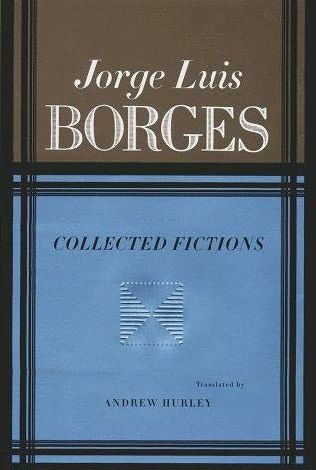
9. Jorge Luis Borges, Argentina, (1899-1986), Collected Fictions
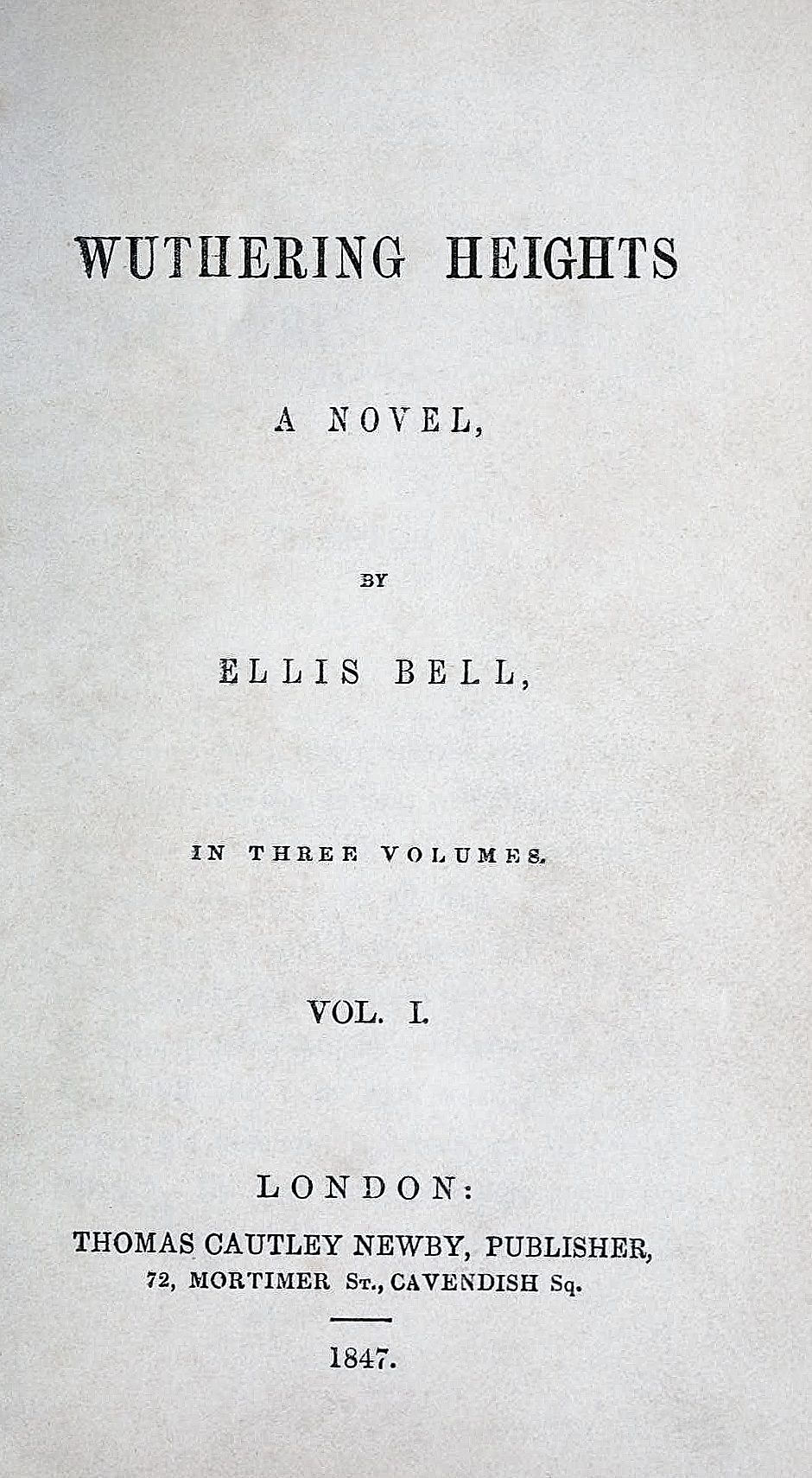
10. Emily Bronte, England,(1818-1848), Wuthering Heights (Đôì gió hú )

Wuthering Heights is Emily Brontë's only novel. It was first published in 1847under the pseudonym Ellis Bell, and a posthumous second edition was edited by her sister Charlotte. The name of the novel comes from the Yorkshire manor on the moors on which the story centres. (As an adjective, wuthering is a Yorkshire word referring to turbulent weather.) The narrative tells the tale of the all-encompassing and passionate, yet thwarted love between Heathcliff and Catherine Earnshaw, and how this unresolved passion eventually destroys both themselves and many around them.
Now considered a classic of English literature, Wuthering Heights's innovative structure, which has been likened to a series of Matryoshka dolls,[1] met with mixed reviews by critics when it first appeared.[2][3] Though Charlotte Brontë'sJane Eyre was originally considered the best of the Brontë sisters' works, many subsequent critics of Wuthering Heights argued that its originality and achievement made it superior.[4] Wuthering Heights has also given rise to many adaptations and inspired works, including films, radio, television dramatisations,musicals and songs (notably the hit Wuthering Heights by Kate Bush) andopera.
Plot summary
The narrative is non-linear, involving several flashbacks, and involves two narrators – Mr Lockwood and Nelly Dean. The novel opens in 1801, with Lockwood arriving at Thrushcross Grange, a grand house on the Yorkshire moors he is renting from the surly Heathcliff, who lives at nearby Wuthering Heights. Lockwood spends the night at Wuthering Heights and has a terrifying dream: the ghost of Catherine Linton, pleading to be admitted to the house from outside. Intrigued, Lockwood asks the housekeeper Nelly Dean to tell the story of Heathcliff and Wuthering Heights.
Nelly takes over the narration and begins her story thirty years earlier, when Heathcliff, a foundling living on the streets of Liverpool, is brought to Wuthering Heights by the then-owner, Mr. Earnshaw and raised as his own. Earnshaw's daughter Catherine becomes Heathcliff's inseparable friend. Her brother Hindley, however, resents Heathcliff, seeing him as an interloper and rival. Earnshaw dies three years later, and Hindley (who has married a woman named Frances) takes over the estate. He brutalizes Heathcliff, forcing him to work as a hired hand. Catherine becomes friends with a neighbour family, the Lintons of Thrushcross Grange, who mellow her initially wild personality. She is especially attached to the refined and mild young Edgar Linton, whom Heathcliff instantaneously dislikes.
A year later, Hindley's wife dies, apparently of consumption, shortly after giving birth to a son, Hareton; Hindley takes to drink. Some two years after that, Catherine agrees to marry Edgar. Nelly knows that this will crush Heathcliff, and Heathcliff overhears Catherine's explanation that it would be "degrading" to marry him. Heathcliff storms out and leaves Wuthering Heights, not hearing Catherine's continuing declarations that Heathcliff is as much a part of her as the rocks are to the earth beneath. Catherine marries Edgar, and is initially very happy. Some time later, Heathcliff returns, intent on destroying those who prevent him from being with Catherine. He has, mysteriously, become very wealthy, and has duped Hindley into making him the heir to Wuthering Heights. Intent on ruining Edgar, Heathcliff elopes with Edgar's sister Isabella, which places him in a position to inherit Thrushcross Grange upon Edgar's death.
Catherine becomes very ill after Heathcliff's return and dies a few hours after giving birth to a daughter also named Catherine, or Cathy. Heathcliff becomes only more bitter and vengeful. Isabella flees her abusive marriage a month later, and subsequently gives birth to a boy, Linton. At around the same time, Hindley dies. Heathcliff takes ownership of Wuthering Heights, and vows to raise Hindley's son Hareton with as much neglect as he had suffered at Hindley's hands years earlier.
Twelve years later, the dying Isabella asks Edgar to raise her and Heathcliff's son, Linton. However, Heathcliff finds out about this and takes the sickly, spoiled child to Wuthering Heights. Heathcliff has nothing but contempt for his son, but delights in the idea of him ruling the property of his enemies. To that end, a few years later, Heathcliff attempts to persuade young Cathy to marry Linton. Cathy refuses, so Heathcliff kidnaps her and forces the two to marry. Soon after, Edgar Linton dies, followed shortly by Linton. This leaves Cathy a widow and a virtual prisoner at Wuthering Heights, as Heathcliff has gained complete control of both Wuthering Heights and Thrushcross Grange. It is at this point in the narrative that Lockwood arrives, taking possession of Thrushcross Grange, and hearing Nelly Dean's story. Shocked, Lockwood leaves for London.
During his absence from the area, however, events reach a climax; Cathy gradually softens toward her rough, uneducated cousin Hareton, just as her mother grew tender towards Heathcliff. When Heathcliff realizes that Cathy and Hareton are in love, he abandons his life-long vendetta. He dies broken and tormented, and Catherine and Hareton marry. Heathcliff is buried next to Catherine (the elder), and the story concludes with Lockwood visiting the grave, unsure of what to feel.

10. Emily Bronte, England,(1818-1848), Wuthering Heights (Đôì gió hú )
Wuthering Heights is Emily Brontë's only novel. It was first published in 1847under the pseudonym Ellis Bell, and a posthumous second edition was edited by her sister Charlotte. The name of the novel comes from the Yorkshire manor on the moors on which the story centres. (As an adjective, wuthering is a Yorkshire word referring to turbulent weather.) The narrative tells the tale of the all-encompassing and passionate, yet thwarted love between Heathcliff and Catherine Earnshaw, and how this unresolved passion eventually destroys both themselves and many around them.
Now considered a classic of English literature, Wuthering Heights's innovative structure, which has been likened to a series of Matryoshka dolls,[1] met with mixed reviews by critics when it first appeared.[2][3] Though Charlotte Brontë'sJane Eyre was originally considered the best of the Brontë sisters' works, many subsequent critics of Wuthering Heights argued that its originality and achievement made it superior.[4] Wuthering Heights has also given rise to many adaptations and inspired works, including films, radio, television dramatisations,musicals and songs (notably the hit Wuthering Heights by Kate Bush) andopera.
Plot summary
The narrative is non-linear, involving several flashbacks, and involves two narrators – Mr Lockwood and Nelly Dean. The novel opens in 1801, with Lockwood arriving at Thrushcross Grange, a grand house on the Yorkshire moors he is renting from the surly Heathcliff, who lives at nearby Wuthering Heights. Lockwood spends the night at Wuthering Heights and has a terrifying dream: the ghost of Catherine Linton, pleading to be admitted to the house from outside. Intrigued, Lockwood asks the housekeeper Nelly Dean to tell the story of Heathcliff and Wuthering Heights.
Nelly takes over the narration and begins her story thirty years earlier, when Heathcliff, a foundling living on the streets of Liverpool, is brought to Wuthering Heights by the then-owner, Mr. Earnshaw and raised as his own. Earnshaw's daughter Catherine becomes Heathcliff's inseparable friend. Her brother Hindley, however, resents Heathcliff, seeing him as an interloper and rival. Earnshaw dies three years later, and Hindley (who has married a woman named Frances) takes over the estate. He brutalizes Heathcliff, forcing him to work as a hired hand. Catherine becomes friends with a neighbour family, the Lintons of Thrushcross Grange, who mellow her initially wild personality. She is especially attached to the refined and mild young Edgar Linton, whom Heathcliff instantaneously dislikes.
A year later, Hindley's wife dies, apparently of consumption, shortly after giving birth to a son, Hareton; Hindley takes to drink. Some two years after that, Catherine agrees to marry Edgar. Nelly knows that this will crush Heathcliff, and Heathcliff overhears Catherine's explanation that it would be "degrading" to marry him. Heathcliff storms out and leaves Wuthering Heights, not hearing Catherine's continuing declarations that Heathcliff is as much a part of her as the rocks are to the earth beneath. Catherine marries Edgar, and is initially very happy. Some time later, Heathcliff returns, intent on destroying those who prevent him from being with Catherine. He has, mysteriously, become very wealthy, and has duped Hindley into making him the heir to Wuthering Heights. Intent on ruining Edgar, Heathcliff elopes with Edgar's sister Isabella, which places him in a position to inherit Thrushcross Grange upon Edgar's death.
Catherine becomes very ill after Heathcliff's return and dies a few hours after giving birth to a daughter also named Catherine, or Cathy. Heathcliff becomes only more bitter and vengeful. Isabella flees her abusive marriage a month later, and subsequently gives birth to a boy, Linton. At around the same time, Hindley dies. Heathcliff takes ownership of Wuthering Heights, and vows to raise Hindley's son Hareton with as much neglect as he had suffered at Hindley's hands years earlier.
Twelve years later, the dying Isabella asks Edgar to raise her and Heathcliff's son, Linton. However, Heathcliff finds out about this and takes the sickly, spoiled child to Wuthering Heights. Heathcliff has nothing but contempt for his son, but delights in the idea of him ruling the property of his enemies. To that end, a few years later, Heathcliff attempts to persuade young Cathy to marry Linton. Cathy refuses, so Heathcliff kidnaps her and forces the two to marry. Soon after, Edgar Linton dies, followed shortly by Linton. This leaves Cathy a widow and a virtual prisoner at Wuthering Heights, as Heathcliff has gained complete control of both Wuthering Heights and Thrushcross Grange. It is at this point in the narrative that Lockwood arrives, taking possession of Thrushcross Grange, and hearing Nelly Dean's story. Shocked, Lockwood leaves for London.
During his absence from the area, however, events reach a climax; Cathy gradually softens toward her rough, uneducated cousin Hareton, just as her mother grew tender towards Heathcliff. When Heathcliff realizes that Cathy and Hareton are in love, he abandons his life-long vendetta. He dies broken and tormented, and Catherine and Hareton marry. Heathcliff is buried next to Catherine (the elder), and the story concludes with Lockwood visiting the grave, unsure of what to feel.
11. Albert Camus, France, (1913-1960), The Stranger = Người Xa Lạ

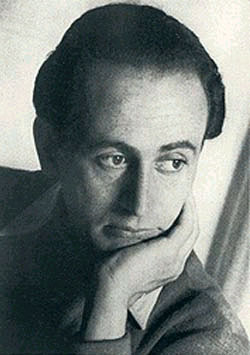
12. Paul Celan, Romania/France, (1920-1970), Poems
13. Louis-Ferdinand Celine, France, (1894-1961), Journey to the End of the Night (Hành trình suô´t đêm tôí)
Journey to the End of the Night (Voyage au bout de la nuit, 1932) is the first novel ofLouis-Ferdinand Céline. This semi-autobiographical work follows antiheroFerdinand Bardamu through his involvement in World War I, colonial Africa, and post-WWI America (where he works for the Ford Motor Company), returning in the second half of the work to France, where he becomes a medical doctor and sets up a practice in a poor Paris suburb, the fictional La Garenne-Rancy. The novel also satirizes the medical profession and the vocation of scientific research. The disparate elements of the work are linked together by recurrent encounters with Léon Robinson, a hapless character whose experiences parallel, to some extent, those of Bardamu.
As its title suggests, Voyage au bout de la nuit is a dark, nihilistic novel of savage, exultant misanthropy, leavened, however, with an ebulliently cynical humor. Céline expresses an almost unrelieved pessimism with regard to human nature, human institutions, society, and life in general. Towards the end of the book, the narrator Bardamu, who is working at an insane asylum, remarks:
". . . . I cannot refrain from doubting that there exist any genuine realizations of our deepest character except war and illness, those two infinities of nightmare," (". . . . je ne peux m'empêcher de mettre en doute qu'il existe d'autres véritables réalisations de nos profonds tempéraments que la guerre et la maladie, ces deux infinis du cauchemar," Voyage au bout de la nuit [Paris: Folio plus classiques, 2006], p. 442).
Bardamu's philosophy of almost universal egotism and hypocrisy is expressed in such maxims on nearly every page of the novel.
From a literary point of view, Céline's first novel is perhaps most remarkable for its revelation of a stunningly new literary style, one that seems to mirror conversational speech, but which also includes many learned elements, and which exerted a considerable influence on subsequent French literature. Céline makes extensive use of ellipsis, hyperbole, and vernacular speech. The novel enjoyed popular success and a fair amount of critical acclaim when it was published in October 1932. Albert Thibaudet, perhaps the greatest of theentre-deux-guerres critics, said that in January 1933 it was still a common topic of conversation at dinner parties in Paris (Henri Godard, "Notice," in Céline, Romans, vol. 1 [Paris: Bibliothèque de la Pléiade, 1981], p. 1262).
Kurt Vonnegut cited Journey as one of his influences in Palm Sunday, and Bardamu's misadventures appear to have influenced Joseph Heller's Catch-22.Charles Bukowski makes reference to Journey in a number of his novels and short stories, and employs prose techniques borrowed from Céline. Bukowski once said that "Journey to the End of the Night was the best book written in the last two thousand years."
The Doors song "End of the Night" has reference to Celines work, as Jim Morrison had read "Journey", perhaps upon that rooftop in Venice, CA on one of his many "trips" under a "cool,jeweled moon". An interesting side note to this is in the lyrics to "End of the Night", the lyrics "Realms of Bliss, Realms of Light", were borrowed from a William Blake poem.
14. Miguel de Cervantes Saavedra, Spain, (1547-1616), Don Quixote (Don-ki-ho-te và những chiê´c côí xay gió )


15. Geoffrey Chaucer, England, (1340-1400), Canterbury Tales
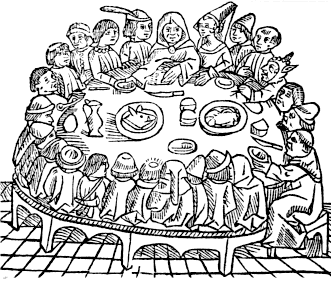
16. Joseph Conrad, England,(1857-1924), Nostromo

Señor Gould is an Englishexpatriate who owns the silver-mining concession in Sulaco. He is tired of the political instability in Costaguana and its concomitantcorruption, and puts his weight behind the Ribierist project, which he believes will bring stability to the country. Instead, the silver mine and the wealth it has generated become a magnet for local warlords to fight over, plunging Costaguana into a new round of chaos. Among others, the revolutionaryMontero invades Sulaco; Señor Gould, adamant that his silver should not become spoil for his enemies, entrusts it to Nostromo, his trusted "capataz de los cargadores" (head longshoreman).
Nostromo is an Italianexpatriate who has risen to that position through his daring exploits. ("Nostromo" is Italian for "mate" or "boatswain," as well as a "contraction" of "nostro uomo" — "our man.") He is so named by his employer, Captain Mitchell. "Nostromo's" real name is Giovanni Battista Fidanza — "Fidanza" meaning "trust" in archaic Italian.
Nostromo is what would today be called a shameless self-publicist. He is believed by Señor Gould to be incorruptible, and for this reason is entrusted with hiding the silver from the revolutionaries. He accepts the mission not out of loyalty to Señor Gould, but rather because he sees an opportunity to increase his own fame.
In the end it is Nostromo, together with a ruined cynic of a doctor and a journalist (all acting for self-serving reasons), who are able to restore some kind of order to Sulaco. It is they who are able to persuade two of the warlords to aid Sulaco's secession from Costaguana and protect it from other armies. Nostromo, the incorruptible one, is the key figure in setting the wheels in motion.
In Conrad's universe, however, almost no one is incorruptible. The exploit does not bring Nostromo the fame he had hoped for, and he feels slighted and used. Feeling that he has risked his life for nothing, he is consumed by resentment, which leads to his corruption and ultimate destruction.
17. Dante Alighieri, Italy, (1265-1321), The Divine Comedy
12. Paul Celan, Romania/France, (1920-1970), Poems
13. Louis-Ferdinand Celine, France, (1894-1961), Journey to the End of the Night (Hành trình suô´t đêm tôí)
Journey to the End of the Night (Voyage au bout de la nuit, 1932) is the first novel ofLouis-Ferdinand Céline. This semi-autobiographical work follows antiheroFerdinand Bardamu through his involvement in World War I, colonial Africa, and post-WWI America (where he works for the Ford Motor Company), returning in the second half of the work to France, where he becomes a medical doctor and sets up a practice in a poor Paris suburb, the fictional La Garenne-Rancy. The novel also satirizes the medical profession and the vocation of scientific research. The disparate elements of the work are linked together by recurrent encounters with Léon Robinson, a hapless character whose experiences parallel, to some extent, those of Bardamu.
As its title suggests, Voyage au bout de la nuit is a dark, nihilistic novel of savage, exultant misanthropy, leavened, however, with an ebulliently cynical humor. Céline expresses an almost unrelieved pessimism with regard to human nature, human institutions, society, and life in general. Towards the end of the book, the narrator Bardamu, who is working at an insane asylum, remarks:
". . . . I cannot refrain from doubting that there exist any genuine realizations of our deepest character except war and illness, those two infinities of nightmare," (". . . . je ne peux m'empêcher de mettre en doute qu'il existe d'autres véritables réalisations de nos profonds tempéraments que la guerre et la maladie, ces deux infinis du cauchemar," Voyage au bout de la nuit [Paris: Folio plus classiques, 2006], p. 442).
Bardamu's philosophy of almost universal egotism and hypocrisy is expressed in such maxims on nearly every page of the novel.
From a literary point of view, Céline's first novel is perhaps most remarkable for its revelation of a stunningly new literary style, one that seems to mirror conversational speech, but which also includes many learned elements, and which exerted a considerable influence on subsequent French literature. Céline makes extensive use of ellipsis, hyperbole, and vernacular speech. The novel enjoyed popular success and a fair amount of critical acclaim when it was published in October 1932. Albert Thibaudet, perhaps the greatest of theentre-deux-guerres critics, said that in January 1933 it was still a common topic of conversation at dinner parties in Paris (Henri Godard, "Notice," in Céline, Romans, vol. 1 [Paris: Bibliothèque de la Pléiade, 1981], p. 1262).
Kurt Vonnegut cited Journey as one of his influences in Palm Sunday, and Bardamu's misadventures appear to have influenced Joseph Heller's Catch-22.Charles Bukowski makes reference to Journey in a number of his novels and short stories, and employs prose techniques borrowed from Céline. Bukowski once said that "Journey to the End of the Night was the best book written in the last two thousand years."
The Doors song "End of the Night" has reference to Celines work, as Jim Morrison had read "Journey", perhaps upon that rooftop in Venice, CA on one of his many "trips" under a "cool,jeweled moon". An interesting side note to this is in the lyrics to "End of the Night", the lyrics "Realms of Bliss, Realms of Light", were borrowed from a William Blake poem.
14. Miguel de Cervantes Saavedra, Spain, (1547-1616), Don Quixote (Don-ki-ho-te và những chiê´c côí xay gió )
15. Geoffrey Chaucer, England, (1340-1400), Canterbury Tales
16. Joseph Conrad, England,(1857-1924), Nostromo
Señor Gould is an Englishexpatriate who owns the silver-mining concession in Sulaco. He is tired of the political instability in Costaguana and its concomitantcorruption, and puts his weight behind the Ribierist project, which he believes will bring stability to the country. Instead, the silver mine and the wealth it has generated become a magnet for local warlords to fight over, plunging Costaguana into a new round of chaos. Among others, the revolutionaryMontero invades Sulaco; Señor Gould, adamant that his silver should not become spoil for his enemies, entrusts it to Nostromo, his trusted "capataz de los cargadores" (head longshoreman).
Nostromo is an Italianexpatriate who has risen to that position through his daring exploits. ("Nostromo" is Italian for "mate" or "boatswain," as well as a "contraction" of "nostro uomo" — "our man.") He is so named by his employer, Captain Mitchell. "Nostromo's" real name is Giovanni Battista Fidanza — "Fidanza" meaning "trust" in archaic Italian.
Nostromo is what would today be called a shameless self-publicist. He is believed by Señor Gould to be incorruptible, and for this reason is entrusted with hiding the silver from the revolutionaries. He accepts the mission not out of loyalty to Señor Gould, but rather because he sees an opportunity to increase his own fame.
In the end it is Nostromo, together with a ruined cynic of a doctor and a journalist (all acting for self-serving reasons), who are able to restore some kind of order to Sulaco. It is they who are able to persuade two of the warlords to aid Sulaco's secession from Costaguana and protect it from other armies. Nostromo, the incorruptible one, is the key figure in setting the wheels in motion.
In Conrad's universe, however, almost no one is incorruptible. The exploit does not bring Nostromo the fame he had hoped for, and he feels slighted and used. Feeling that he has risked his life for nothing, he is consumed by resentment, which leads to his corruption and ultimate destruction.
17. Dante Alighieri, Italy, (1265-1321), The Divine Comedy
18. Charles Dickens, England, (1812-1870), Great Expectations
Great Expectations is a Bildungsroman (a novel tracing the life of theprotagonist) by Charles Dickens and first serialized in All the Year Round from December 1860 to August 1861. The action of the story takes place fromChristmas Eve, 1812, when the protagonist is about seven years old, to the winter of 1840.[1]
Great Expectations is the story of the orphan Pip told by the protagonist in semi-autobiographical style as a remembrance of his life from the early days of his childhood until years after the main conflicts of the story have been resolved in adulthood. The story is also semi-autobiographical to the author Dickens, as are some of his other stories, drawing on his experiences of life and people
19. Denis Diderot, France, (1713-1784), Jacques the Fatalist and His Master

Jacques le fataliste et son maître (English title: Jacques the Fatalist and his Master) is a book written by Denis Diderot from the late 1760s to 1778 and published in 1796.
The main subject of the book is the relationship between the valet Jacques and his master (who is never named). The two are traveling to a destination the narrator leaves insistently vague, and to dispel the boredom of the trip Jacques is compelled by his master to recount the story of his loves. However, Jacques's story is continuously interrupted by other characters and various comic mishaps. Other characters in the book tell stories as well, and they, too, are continuously interrupted.
There is even a "reader" character who periodicaly interrupts the narrator with questions, objections, and demands for more information or detail. The tales told are usually humorous, with romance or sex as their subject matter, and feature complex characters indulging in deception.
Jacques's key philosophy is that everything that happens is "written up above" ("tout ce qui nous arrive de bien et de mal ici-bas était écrit là-haut"), a "great scroll" which is unrolled a little bit at a time, on which all events, past and future, are written. Yet Jacques still places value on his actions; he is not a passive character. Critics such as J. Robert Loy have characterized Jacques's philosophy as not fatalism but determinism.
The book is full of contradictory characters and other dualities. One story tells of two men in the army who were so much alike that, though they were the best of friends, they could not stop dueling and wounding each other. Another concerns Father Hudson, an intelligent and effective reformer of the church, who is privately the most debauched character in the book. Even Jacques and his master transcend their apparent roles, as Jacques proves, in his insolence, that his master cannot live without him, and therefore it is Jacques who is the master, and the master who is the servant.
Jacques is in many ways a metafictional work. The story of Jacques's loves is lifted directly from Tristram Shandy, a design choice which Diderot makes no secret of, as the narrator at the end announces the insertion an entire passage from Tristram Shandy into the story. Throughout the work, the narrator refers derisively to sentimental novels and calls attention to the ways in which events develop more realistically in his book. At other times, the narrator tires of the tedium of narration altogether and obliges the reader to supply certain trivial details themselves.
20. Alfred Doblin, Germany, (1878-1957), Berlin Alexanderplatz

Berlin Alexanderplatz is a novel by Alfred Döblin, published in1929. The story concerns a small-time criminal, Franz Biberkopf, fresh from prison, who is drawn into the underworld. When his criminal mentor murders the prostitute whom Biberkopf has been relying on as an anchor, he realizes that he will be unable to extricate himself from the underworld into which he has sunk.
The novel is set in the working classAlexanderplatz district of1920s Berlin. Its narrative style is reminiscent of James Joyce - In fact, Döblin had already finished the work when he readUlysses which inspired him to radically rewrite his own book. It is told from multiple points of view, and uses sound effects, newspaper articles, songs, speeches, and other books to propel the plot forward.
The novel was adapted twice into a movie, the first calledBerlin - Alexanderplatz, in 1931. Döblin worked on the adaptation, along with Karl Heinz Martin and Hans Wilhelm. It was directed by Piel Jutzi, and starred Heinrich George, Maria Bard, Margarete Schlegel, Bernhard Minetti, Gerhard Bienert,Albert Florath and Paul Westermeier. It ran 85 minutes.
The second adaptation was by Rainer Werner Fassbinder. Released in 1980, it ran 15 1/2 hours in length and is considered, by many, to be his magnum opus.
Great Expectations is a Bildungsroman (a novel tracing the life of theprotagonist) by Charles Dickens and first serialized in All the Year Round from December 1860 to August 1861. The action of the story takes place fromChristmas Eve, 1812, when the protagonist is about seven years old, to the winter of 1840.[1]
Great Expectations is the story of the orphan Pip told by the protagonist in semi-autobiographical style as a remembrance of his life from the early days of his childhood until years after the main conflicts of the story have been resolved in adulthood. The story is also semi-autobiographical to the author Dickens, as are some of his other stories, drawing on his experiences of life and people
19. Denis Diderot, France, (1713-1784), Jacques the Fatalist and His Master
Jacques le fataliste et son maître (English title: Jacques the Fatalist and his Master) is a book written by Denis Diderot from the late 1760s to 1778 and published in 1796.
The main subject of the book is the relationship between the valet Jacques and his master (who is never named). The two are traveling to a destination the narrator leaves insistently vague, and to dispel the boredom of the trip Jacques is compelled by his master to recount the story of his loves. However, Jacques's story is continuously interrupted by other characters and various comic mishaps. Other characters in the book tell stories as well, and they, too, are continuously interrupted.
There is even a "reader" character who periodicaly interrupts the narrator with questions, objections, and demands for more information or detail. The tales told are usually humorous, with romance or sex as their subject matter, and feature complex characters indulging in deception.
Jacques's key philosophy is that everything that happens is "written up above" ("tout ce qui nous arrive de bien et de mal ici-bas était écrit là-haut"), a "great scroll" which is unrolled a little bit at a time, on which all events, past and future, are written. Yet Jacques still places value on his actions; he is not a passive character. Critics such as J. Robert Loy have characterized Jacques's philosophy as not fatalism but determinism.
The book is full of contradictory characters and other dualities. One story tells of two men in the army who were so much alike that, though they were the best of friends, they could not stop dueling and wounding each other. Another concerns Father Hudson, an intelligent and effective reformer of the church, who is privately the most debauched character in the book. Even Jacques and his master transcend their apparent roles, as Jacques proves, in his insolence, that his master cannot live without him, and therefore it is Jacques who is the master, and the master who is the servant.
Jacques is in many ways a metafictional work. The story of Jacques's loves is lifted directly from Tristram Shandy, a design choice which Diderot makes no secret of, as the narrator at the end announces the insertion an entire passage from Tristram Shandy into the story. Throughout the work, the narrator refers derisively to sentimental novels and calls attention to the ways in which events develop more realistically in his book. At other times, the narrator tires of the tedium of narration altogether and obliges the reader to supply certain trivial details themselves.
20. Alfred Doblin, Germany, (1878-1957), Berlin Alexanderplatz
Berlin Alexanderplatz is a novel by Alfred Döblin, published in1929. The story concerns a small-time criminal, Franz Biberkopf, fresh from prison, who is drawn into the underworld. When his criminal mentor murders the prostitute whom Biberkopf has been relying on as an anchor, he realizes that he will be unable to extricate himself from the underworld into which he has sunk.
The novel is set in the working classAlexanderplatz district of1920s Berlin. Its narrative style is reminiscent of James Joyce - In fact, Döblin had already finished the work when he readUlysses which inspired him to radically rewrite his own book. It is told from multiple points of view, and uses sound effects, newspaper articles, songs, speeches, and other books to propel the plot forward.
The novel was adapted twice into a movie, the first calledBerlin - Alexanderplatz, in 1931. Döblin worked on the adaptation, along with Karl Heinz Martin and Hans Wilhelm. It was directed by Piel Jutzi, and starred Heinrich George, Maria Bard, Margarete Schlegel, Bernhard Minetti, Gerhard Bienert,Albert Florath and Paul Westermeier. It ran 85 minutes.
The second adaptation was by Rainer Werner Fassbinder. Released in 1980, it ran 15 1/2 hours in length and is considered, by many, to be his magnum opus.
21. Fyodor M. Dostoyevsky, Russia, (1821-1881), Crime and Punishment (=Tội Ác và Hình Phạt);
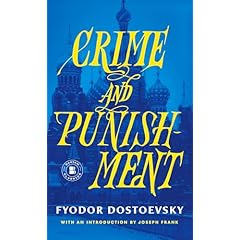

Crime and Punishment (Russian: Преступление и наказание) is a novelwritten by Russian authorFyodor Dostoevsky. First published in a journal namedThe Russian Messenger, it appeared in twelve monthly installments in 1866,[1]and was later published as a novel.[2] Along with Leo Tolstoy's War and Peace,the novel is considered one of the best-known and most influential Russian novels of all time.[3]
Crime and Punishment focuses on Raskolnikov, an impoverished student who formulates a plan to kill and rob a hated pawnbroker, thereby solving his money problems and at the same time ridding the world of her evil. Exhibiting some symptoms of megalomania, Raskolnikov thinks himself a gifted man, similar toNapoleon. As an extraordinary man, he feels justified in his decision to murder, since he exists outside the moral constraints that affect "ordinary" people.
However, immediately after the crime, Raskolnikov becomes ill, and is troubled by the memory of his actions. Crime and Punishment portrays Raskolnikov's gradual realisation of his crime and his growing desire to confess. Moreover, Raskolnikov's attempts to protect his sister Dunya from unappealing suitors, and also his unexpected love for a destitute prostitute demonstrate Raskolnikov's longing for redemption.
22. Fyodor M. Dostoyevsky, Russia, (1821-1881), The Idiot;

Dostoevsky's motives for writing The Idiot stem from his desire to depict the "positively good man". This man is naturally likened to Christ in many ways. Dostoevsky uses Myshkin's introduction to the Petersburg society as a way to contrast the nature of Russian society at the time and the isolation and innocence of this good man. This is highlighted by his conflicts and relationship with Rogozhin. Indeed, Myshkin and Rogozhin are contrasted from the outset. Myshkin is associated with light, Rogozhin with dark. For example, in their initial descriptions on the train, Myshkin is described as having light hair and blue eyes, while Rogozhin has "dark features". Rogozhin's house is submerged in darkness, with iron bars on the windows. He is not only an embodiment of darkness, but surrounded by it. The two characters are clearly antithetical. If Myshkin be seen as Christ, Rogozhin could easily be seen as the devil. Indeed, 'rog', in Russian, means horn, adding credence to such an assertion, although the primary association of his name is with rogozha ("bast"), possibly hinting at his humble origins.
Despite their difference, they are both after Nastasya Filippovna — good and bad (and mediocre, in the image of Ganya) strive for the same thing. Love itself is shown in various manifestations, spurned by various motives. While vain Ganya wishes to marry Nastasya in order that he might, through acquisition of a large dowry, spark some of the individuality which he senses he lacks, Rogozhin loves Nastasya with a deep passion - a passion which eventually drives him to kill her. Myshkin, however, loves her out of pity, out of Christian love. This love for her supersedes even the romantic love he has for Aglaya. There is a parallel between Rogozhin and the Russian upper-class society. The materialistic society which praises the values Myshkin represents and professes itself to be "good", cannot accommodate Prince Myshkin; Rogozhin, though he truly loves Nastasya, commits murder in the end. Nastasya herself has been corrupted by a depraved society. Her beauty and initial innocence has led Totsky (perhaps the most repugnant of characters in the novel) to keep her as a concubine and she falls into a quasi-madne
23. Fyodor M. Dostoyevsky, Russia, (1821-1881), The Possessed; (aka "The Devils" or "Demons")

The Possessed (In Russian: Бесы, tr. Besy), also translated as The Devils or Demons, is an 1872novel by Fyodor Dostoevsky. For an explanation of the marked difference in the English-language title, please see the section "Note on the title" below.
An extremely political book, it is a testimonial of life in Imperial Russia in the late19th century.
As the revolutionarydemocrats begin to rise in Russia, different ideologies begin to collide. All of them are exposed in this book, where Dostoevsky shows his disgust for the left-wing idealists.
The book has four primary ideological characters: Verkhovensky, Shatov, Stavrogin and Kirilov. Through their philosophies, Dostoyevsky describes the political chaos arising in Russia
24. Fyodor M. Dostoyevsky, Russia, (1821-1881), The Brothers Karamazov .

The Brothers Karamazov (Братья Карамазовы in Russian, /'bratʲjə karə'mazəvɨ/) is the last novel by the Russian author Fyodor Dostoevsky, generally considered the culmination of his life's work. Dostoevsky spent nearly two years writing The Brothers Karamazov, which was published as a serial inThe Russian Messenger and completed in November of 1880. Dostoevsky intended it to be the first part in an epic story titled The Life of a Great Sinner,[1] but he died fewer than four months after publication.
The book is written on two levels: on the surface it is the story of a parricide in which all of a murdered man's sons share varying degrees of complicity but, on a deeper level, it is a spiritual drama of the moral struggles between faith, doubt, reason, and free will. The novel was composed mostly in Staraya Russa, which is also the main setting of the book.
Since its publication, it has been acclaimed all over the world by thinkers as diverse as Sigmund Freud,[2] Andrew R. MacAndrew,[3] Konstantin Mochulsky,[4] Albert Einstein,[5] and Pope Benedict XVI[6] as one of the supreme achievements in world literature.
26. Ralph Ellison, United States, (1914-1994), Invisible Man(Ngươì tàng hình ).
(Truyện được dựng thành film cũng râ´t nổi tiê´ng )

The Invisible Man is a famous 1897science fiction novella by H.G. Wells. Wells' novel was originally serialized in Pearson's Magazine in 1897, and published as a novel the same year. The Invisible Man of the title is Griffin, a scientist who theorizes that if a person's refractive index is changed to exactly that of air and his body does not absorb or reflect light, then he will not be visible. He successfully carries out this procedure on himself, but cannot become visible again, becoming mentally unstable as a result.
27. Euripides, Greece, (c. 480-406 B.C.), Medea
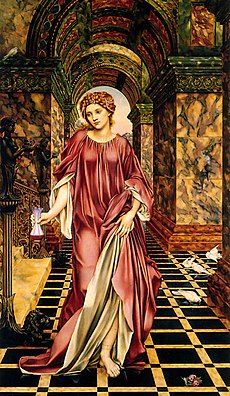
Medea
28. William Faulkner, United States, (1897-1962), Absalom, Absalom;

Absalom, Absalom! details the rise and fall of Thomas Sutpen, a white man born into poverty in the Virginias who comes to Mississippi with the twin aims of becoming rich and becoming a powerful family patriarch. The story is told entirely in flashbacks narrated mostly by Quentin Compson and by Rosa Coldfield, with events told in non-chronological order and often retold by different people with differing details, resulting in a peeling-back-the-onion way of revealing the true story of the Sutpens to the reader. Rosa initially narrates the story, with long digressions and an apparently hazy memory, to Quentin Compson, whose grandfather was a friend of Sutpen’s. Quentin's father then fills in some of the details to Quentin, as well. Finally, Quentin relates the story to his roommate at Harvard University, Shreve, and in each retelling, the reader receives more details as the parties flesh out the story by adding layers.
Thomas Sutpen arrives in Jefferson, Mississippi, with some slaves and a Frencharchitect who has been somehow forced into working for him. Sutpen obtains a large plot of land from a local Native American tribe and immediately begins building a large plantation called Sutpen’s Hundred, including an ostentatious mansion. All he needs to complete his plan is a wife to bear him a few children (particularly a son to be his heir), so he ingratiates himself with a local merchant and marries the man’s daughter, Ellen Coldfield. Ellen bears Sutpen two children, a son named Henry and a daughter named Judith, both of whom are destined for tragedy.
Henry goes to the University of Mississippi and meets a fellow student who is a few years his senior named Charles Bon. Henry brings Bon home for Christmas, where he and Judith begin a quiet romance that leads to a presumed engagement. However, Sutpen realizes that Charles Bon is his son from an earlier marriage and moves to stop the proposed union.
Sutpen had worked on a plantation in Haiti as the overseer, and after subdueing a slave uprising, is offered the hand of the plantion owners daughter,Eulalia Bon, who bore him a son, Charles. Sutpen had not known that Eulalia was of mixed race until after the marriage and birth of Charles, but when he finds out he has been deceived (which is his own interpretation of events), he renounces the marriage as void and leaves his wife and child, but leaves them his fortune as part of his own moral recompense. The reader also later learns of Sutpen's childhood, where young Thomas learned that society could base human worth on material worth. It is this episode that sets into motion Thomas' plan to start a dynasty.
When Sutpen tells Henry that Charles is his half-brother and that Judith must not be allowed to marry him, Henry refuses to believe, repudiates his birthright, and accompanies Charles to his home in New Orleans. They then return to Mississippi to enlist in their University company where they join the Confederate Army and fight in the Civil War. During the war, Henry wrestles with his conscience until presumably resolves to allow the marriage of half-brother and sister until Sutpen reveals to Henry that Charles is also part black. At the conclusion of the war, Henry enacts his father's interdiction of marriage between Charles and Judith, killing Charles at the gates to the mansion then fleeing into self-exile.
Thomas Sutpen returns from the war and begins to repair his home and dynasty. He proposes to Rosa Coldfield, his dead wife's younger sister, and she accepts. However, Sutpen insults Rosa by demanding that she bear him a son before the wedding takes place, and she leaves Sutpen's Hundred to begin her forty-three years of hate. Sutpen then begins an affair with Milly, the fifteen-year-old granddaughter of Wash Jones, a squatter who lives on the Sutpen property. The affair continues until Milly becomes pregnant and gives birth to a daughter. Sutpen is terribly disappointed, because the last hope of repairing his Sutpen dynasty rested on whether Milly gave birth to a son. Sutpen casts Milly and the child aside. An enraged Wash Jones kills Sutpen, his own granddaughter and Sutpen's newborn daughter, and is in turn killed by the posse that arrives to arrest him.
The story of Thomas Sutpen's legacy ends with Quentin taking Rosa back to the seemingly abandoned Sutpen’s Hundred plantation, where they find Henry Sutpen and a slave woman named Clytie, herself the daughter of Thomas Sutpen by a slave woman. Henry has returned to the estate to die. Three months later, when Rosa returns with medical help for Henry, Clytie starts a fire that consumes the plantation anand kills Henry and herself. The only remaining Sutpen being Jim Bond, Charles Bon's half black grandson who remains on Sutpen's Hundred.
29. William Faulkner, United States, (1897-1962), The Sound and the Fury

The Sound and the Fury is aSouthern Gothicnovel written by American authorWilliam Faulkner, which makes use of the stream of consciousness narrative technique pioneered by European authors such as James Joyce and Virginia Woolf. Published in 1929, it was his fourth novel. It first received commercial success in 1931 when Faulkner's novel Sanctuary, a sensationalist story which Faulkner later admitted was written only for money, drew widespread attention to the author. Critical praise soon followed. The book continues to sell well as of 2007, and it has become standard college curriculum around the United States.
30. Gustave Flaubert, France, (1821-1880), Madame Bovary;
Madame Bovary is a novel by Gustave Flaubert that was attacked for obscenity by public prosecutors when it was first serialised in La Revue de Parisbetween 1 October1856 and 15 December1856, resulting in a trial in January1857 that made it notorious. After the acquittal on 7 February, it became abestseller in book form in April 1857, and is now seen as one of the first modernrealistic novels.
The novel focuses on a doctor's wife, Emma Bovary, who has adulterous affairsand lives beyond her means in order to escape the banalities and emptiness of provincial life. Though the basic plot is rather simple, even archetypal, the novel's true art lies in its details and hidden patterns. Flaubert was notoriously perfectionistic about his writing and claimed to always be searching for le mot juste (the right word).
Crime and Punishment (Russian: Преступление и наказание) is a novelwritten by Russian authorFyodor Dostoevsky. First published in a journal namedThe Russian Messenger, it appeared in twelve monthly installments in 1866,[1]and was later published as a novel.[2] Along with Leo Tolstoy's War and Peace,the novel is considered one of the best-known and most influential Russian novels of all time.[3]
Crime and Punishment focuses on Raskolnikov, an impoverished student who formulates a plan to kill and rob a hated pawnbroker, thereby solving his money problems and at the same time ridding the world of her evil. Exhibiting some symptoms of megalomania, Raskolnikov thinks himself a gifted man, similar toNapoleon. As an extraordinary man, he feels justified in his decision to murder, since he exists outside the moral constraints that affect "ordinary" people.
However, immediately after the crime, Raskolnikov becomes ill, and is troubled by the memory of his actions. Crime and Punishment portrays Raskolnikov's gradual realisation of his crime and his growing desire to confess. Moreover, Raskolnikov's attempts to protect his sister Dunya from unappealing suitors, and also his unexpected love for a destitute prostitute demonstrate Raskolnikov's longing for redemption.
22. Fyodor M. Dostoyevsky, Russia, (1821-1881), The Idiot;
Dostoevsky's motives for writing The Idiot stem from his desire to depict the "positively good man". This man is naturally likened to Christ in many ways. Dostoevsky uses Myshkin's introduction to the Petersburg society as a way to contrast the nature of Russian society at the time and the isolation and innocence of this good man. This is highlighted by his conflicts and relationship with Rogozhin. Indeed, Myshkin and Rogozhin are contrasted from the outset. Myshkin is associated with light, Rogozhin with dark. For example, in their initial descriptions on the train, Myshkin is described as having light hair and blue eyes, while Rogozhin has "dark features". Rogozhin's house is submerged in darkness, with iron bars on the windows. He is not only an embodiment of darkness, but surrounded by it. The two characters are clearly antithetical. If Myshkin be seen as Christ, Rogozhin could easily be seen as the devil. Indeed, 'rog', in Russian, means horn, adding credence to such an assertion, although the primary association of his name is with rogozha ("bast"), possibly hinting at his humble origins.
Despite their difference, they are both after Nastasya Filippovna — good and bad (and mediocre, in the image of Ganya) strive for the same thing. Love itself is shown in various manifestations, spurned by various motives. While vain Ganya wishes to marry Nastasya in order that he might, through acquisition of a large dowry, spark some of the individuality which he senses he lacks, Rogozhin loves Nastasya with a deep passion - a passion which eventually drives him to kill her. Myshkin, however, loves her out of pity, out of Christian love. This love for her supersedes even the romantic love he has for Aglaya. There is a parallel between Rogozhin and the Russian upper-class society. The materialistic society which praises the values Myshkin represents and professes itself to be "good", cannot accommodate Prince Myshkin; Rogozhin, though he truly loves Nastasya, commits murder in the end. Nastasya herself has been corrupted by a depraved society. Her beauty and initial innocence has led Totsky (perhaps the most repugnant of characters in the novel) to keep her as a concubine and she falls into a quasi-madne
23. Fyodor M. Dostoyevsky, Russia, (1821-1881), The Possessed; (aka "The Devils" or "Demons")
The Possessed (In Russian: Бесы, tr. Besy), also translated as The Devils or Demons, is an 1872novel by Fyodor Dostoevsky. For an explanation of the marked difference in the English-language title, please see the section "Note on the title" below.
An extremely political book, it is a testimonial of life in Imperial Russia in the late19th century.
As the revolutionarydemocrats begin to rise in Russia, different ideologies begin to collide. All of them are exposed in this book, where Dostoevsky shows his disgust for the left-wing idealists.
The book has four primary ideological characters: Verkhovensky, Shatov, Stavrogin and Kirilov. Through their philosophies, Dostoyevsky describes the political chaos arising in Russia
24. Fyodor M. Dostoyevsky, Russia, (1821-1881), The Brothers Karamazov .

The Brothers Karamazov (Братья Карамазовы in Russian, /'bratʲjə karə'mazəvɨ/) is the last novel by the Russian author Fyodor Dostoevsky, generally considered the culmination of his life's work. Dostoevsky spent nearly two years writing The Brothers Karamazov, which was published as a serial inThe Russian Messenger and completed in November of 1880. Dostoevsky intended it to be the first part in an epic story titled The Life of a Great Sinner,[1] but he died fewer than four months after publication.
The book is written on two levels: on the surface it is the story of a parricide in which all of a murdered man's sons share varying degrees of complicity but, on a deeper level, it is a spiritual drama of the moral struggles between faith, doubt, reason, and free will. The novel was composed mostly in Staraya Russa, which is also the main setting of the book.
Since its publication, it has been acclaimed all over the world by thinkers as diverse as Sigmund Freud,[2] Andrew R. MacAndrew,[3] Konstantin Mochulsky,[4] Albert Einstein,[5] and Pope Benedict XVI[6] as one of the supreme achievements in world literature.
- ^ Hutchins, Robert Maynard, editor in chief (1952). Great Books of the Western World. Chicago: William Benton.
- ^ Freud, Sigmund, Writings on Art and Literature
- ^ MacAndrew, Andrew R., "A Note from the Translator," from his translation
- ^ Mochulsky, Konstantin, "Dostoyevsky and The Brothers Karamazov," introduction to MacAndrew translation
- ^ The Collected Papers of Albert Einstein, Volume 9: The Berlin Years: Correspondence, January 1919 - April 1920
- ^ Fields 2005
26. Ralph Ellison, United States, (1914-1994), Invisible Man(Ngươì tàng hình ).
(Truyện được dựng thành film cũng râ´t nổi tiê´ng )
The Invisible Man is a famous 1897science fiction novella by H.G. Wells. Wells' novel was originally serialized in Pearson's Magazine in 1897, and published as a novel the same year. The Invisible Man of the title is Griffin, a scientist who theorizes that if a person's refractive index is changed to exactly that of air and his body does not absorb or reflect light, then he will not be visible. He successfully carries out this procedure on himself, but cannot become visible again, becoming mentally unstable as a result.
27. Euripides, Greece, (c. 480-406 B.C.), Medea

Medea
28. William Faulkner, United States, (1897-1962), Absalom, Absalom;
Absalom, Absalom! details the rise and fall of Thomas Sutpen, a white man born into poverty in the Virginias who comes to Mississippi with the twin aims of becoming rich and becoming a powerful family patriarch. The story is told entirely in flashbacks narrated mostly by Quentin Compson and by Rosa Coldfield, with events told in non-chronological order and often retold by different people with differing details, resulting in a peeling-back-the-onion way of revealing the true story of the Sutpens to the reader. Rosa initially narrates the story, with long digressions and an apparently hazy memory, to Quentin Compson, whose grandfather was a friend of Sutpen’s. Quentin's father then fills in some of the details to Quentin, as well. Finally, Quentin relates the story to his roommate at Harvard University, Shreve, and in each retelling, the reader receives more details as the parties flesh out the story by adding layers.
Thomas Sutpen arrives in Jefferson, Mississippi, with some slaves and a Frencharchitect who has been somehow forced into working for him. Sutpen obtains a large plot of land from a local Native American tribe and immediately begins building a large plantation called Sutpen’s Hundred, including an ostentatious mansion. All he needs to complete his plan is a wife to bear him a few children (particularly a son to be his heir), so he ingratiates himself with a local merchant and marries the man’s daughter, Ellen Coldfield. Ellen bears Sutpen two children, a son named Henry and a daughter named Judith, both of whom are destined for tragedy.
Henry goes to the University of Mississippi and meets a fellow student who is a few years his senior named Charles Bon. Henry brings Bon home for Christmas, where he and Judith begin a quiet romance that leads to a presumed engagement. However, Sutpen realizes that Charles Bon is his son from an earlier marriage and moves to stop the proposed union.
Sutpen had worked on a plantation in Haiti as the overseer, and after subdueing a slave uprising, is offered the hand of the plantion owners daughter,Eulalia Bon, who bore him a son, Charles. Sutpen had not known that Eulalia was of mixed race until after the marriage and birth of Charles, but when he finds out he has been deceived (which is his own interpretation of events), he renounces the marriage as void and leaves his wife and child, but leaves them his fortune as part of his own moral recompense. The reader also later learns of Sutpen's childhood, where young Thomas learned that society could base human worth on material worth. It is this episode that sets into motion Thomas' plan to start a dynasty.
When Sutpen tells Henry that Charles is his half-brother and that Judith must not be allowed to marry him, Henry refuses to believe, repudiates his birthright, and accompanies Charles to his home in New Orleans. They then return to Mississippi to enlist in their University company where they join the Confederate Army and fight in the Civil War. During the war, Henry wrestles with his conscience until presumably resolves to allow the marriage of half-brother and sister until Sutpen reveals to Henry that Charles is also part black. At the conclusion of the war, Henry enacts his father's interdiction of marriage between Charles and Judith, killing Charles at the gates to the mansion then fleeing into self-exile.
Thomas Sutpen returns from the war and begins to repair his home and dynasty. He proposes to Rosa Coldfield, his dead wife's younger sister, and she accepts. However, Sutpen insults Rosa by demanding that she bear him a son before the wedding takes place, and she leaves Sutpen's Hundred to begin her forty-three years of hate. Sutpen then begins an affair with Milly, the fifteen-year-old granddaughter of Wash Jones, a squatter who lives on the Sutpen property. The affair continues until Milly becomes pregnant and gives birth to a daughter. Sutpen is terribly disappointed, because the last hope of repairing his Sutpen dynasty rested on whether Milly gave birth to a son. Sutpen casts Milly and the child aside. An enraged Wash Jones kills Sutpen, his own granddaughter and Sutpen's newborn daughter, and is in turn killed by the posse that arrives to arrest him.
The story of Thomas Sutpen's legacy ends with Quentin taking Rosa back to the seemingly abandoned Sutpen’s Hundred plantation, where they find Henry Sutpen and a slave woman named Clytie, herself the daughter of Thomas Sutpen by a slave woman. Henry has returned to the estate to die. Three months later, when Rosa returns with medical help for Henry, Clytie starts a fire that consumes the plantation anand kills Henry and herself. The only remaining Sutpen being Jim Bond, Charles Bon's half black grandson who remains on Sutpen's Hundred.
29. William Faulkner, United States, (1897-1962), The Sound and the Fury
The Sound and the Fury is aSouthern Gothicnovel written by American authorWilliam Faulkner, which makes use of the stream of consciousness narrative technique pioneered by European authors such as James Joyce and Virginia Woolf. Published in 1929, it was his fourth novel. It first received commercial success in 1931 when Faulkner's novel Sanctuary, a sensationalist story which Faulkner later admitted was written only for money, drew widespread attention to the author. Critical praise soon followed. The book continues to sell well as of 2007, and it has become standard college curriculum around the United States.
30. Gustave Flaubert, France, (1821-1880), Madame Bovary;
Madame Bovary is a novel by Gustave Flaubert that was attacked for obscenity by public prosecutors when it was first serialised in La Revue de Parisbetween 1 October1856 and 15 December1856, resulting in a trial in January1857 that made it notorious. After the acquittal on 7 February, it became abestseller in book form in April 1857, and is now seen as one of the first modernrealistic novels.
The novel focuses on a doctor's wife, Emma Bovary, who has adulterous affairsand lives beyond her means in order to escape the banalities and emptiness of provincial life. Though the basic plot is rather simple, even archetypal, the novel's true art lies in its details and hidden patterns. Flaubert was notoriously perfectionistic about his writing and claimed to always be searching for le mot juste (the right word).
31. Gustave Flaubert, France, (1821-1880), A Sentimental Education
32. Federico Garcia Lorca, Spain, (1898-1936), Gypsy Ballads

Federico García Lorca is, with Cervantes, the best known figure in Spanish literature, though his fame owes as much to his murder at the outset of the Spanish Civil War as to his writing. Fifty years on it is the writing both poetry and drama whose quality is being recognised and acclaimed, as recent performances of his plays suggest.
Lorca's famous Gypsy Ballads were composed in the 1920s, when his poetic style was evolving from the traditional towards the surrealist. The combination of the ballad's perennial narrative format with startling and allusive imagery has intrigued readers ever since. Dr Havard argues that the fatalism and tribalism of the gypsy settings relate to Lorca's own subjective dilemma and sexual anxieties, and that they ultimately make a deeply personal statement. The translations are broadly into free verse which aims to preserve the directness and the rhythm of the Spanish original so that the force of the poems may be appreciated by English readers.
33. Gabriel Garcia Marquez. Colombia, (b. 1928), One
Hundred Years of Solitude(= Cien años de soledad= Trăm năm cô đơn);

One Hundred Years of Solitude (Spanish: Cien años de soledad) is a novel byGabriel García Márquez which was first published in Spanish in 1967 (Buenos Aires: Sudamericana), with an Englishtranslation by Gregory Rabassa released in1970 (New York: Harper and Row). The book is considered García Márquez's masterpiece, metaphorically encompassing the history of Colombia. The novel chronicles a family's struggle, and the history of their fictional town, Macondo, for one hundred years. García Márquez acknowledges in his autobiographyLiving to Tell the Tale that Macondo was based on the towns where he spent his childhood.
34. Gabriel Garcia Marquez. Colombia, Love in the Time of Cholera

The novel begins as Dr. Urbino comes to examine the body of his close friend Jeremiah Saint-Amour. Jeremiah killed himself at the age of 60 in order to avoid growing old. Upon returning to his home, he finds his beloved pet parrot atop amango tree. While trying to retrieve it, he falls to his death.
Florentino Ariza takes this moment to proclaim his love for Dr. Urbino's aged wife, Fermina Daza, but she is repulsed by his outburst and more than a little scared at the feelings she has engendered. When she was young, she and Florentino had written passionate love letters to each other and had even decided to get married. Upon seeing Florentino, however, Fermina is overcome with disgust for him and rejects him.
Florentino maintains an obsession for Fermina (see Pierre Abélard) and intends to stay a virgin until they are together, but soon finds himself using sex to mitigate the pain of their separation. Fermina marries Dr. Urbino and becomes a respectable wife to him. Dr. Urbino does likewise except for a brief affair.
Only after Dr. Urbino's death is Florentino able to revisit his love for Fermina. He is able to--with the power of his writing--slowly rekindle their relationship. On a river voyage together, the elderly couple finds themselves in love. Fermina fears the scandal this will bring so the Captain of the ship raises the yellow flag of cholera, dooming them to exile but also to be together forever.
35. Gilgamesh, Mesopotamia (c.1800 B.C.)

Gilgamesh was an historical king of Uruk in Babylonia, on the River Euphrates in modern Iraq; he lived about 2700 B.C. Although historians (and your textbook) tend to emphasize Hammurabi and his code of law, the civilizations of the Tigris-Euphrates area, among the first civilizations, focus rather on Gilgamesh and the legends accruing around him to explain, as it were, themselves.
Many stories and myths were written about Gilgamesh, some of which were written down about 2000 B.C. in the Sumerian language on clay tablets which still survive; the Sumerian language, as far as we know, bears no relation to any other human language we know about. These Sumerian Gilgamesh stories were integrated into a longer poem, versions of which survive not only in Akkadian (the Semitic language, related to Hebrew, spoken by the Babylonians) but also on tablets written in Hurrian and Hittite (an Indo-European language, a family of languages which includes Greek and English, spoken in Asia Minor).
All the above languages were written in the script known as cuneiform, which means "wedge-shaped." The fullest surviving version, from which the summary here is taken, is derived from twelve stone tablets, in the Akkadian language, found in the ruins of the library of Ashurbanipal, king of Assyria 669-633 B.C., at Nineveh. The library was destroyed by the Persians in 612 B.C., and all the tablets are damaged. The tablets actually name an author, which is extremely rare in the ancient world, for this particular version of the story: Shin-eqi-unninni. You are being introduced here to the oldest known human author we can name by name!
This summary is derived from several sources: translations, commentaries, and academic scholarship on the Shin-eqi-unninni tablets. Verses are derived from several English and French translations in consultation with the English and German language commentaries and with the Babylonian text. For the entire text, you should turn to The Epic of Gilgamesh , trans. by Maureen Gallery Kovacs (Stanford: Stanford University Press, 1990), or Gilgamesh , translated by John Maier and John Gardner (New York: Vintage, 1981)
36. Johann Wolfgang von Goethe, Germany, (1749-1832),Faust (= Bi kịch về Dr. Faust))


Although there is no precise classification in the overall story, the individual scenes may be loosely bound into three parts: The Prologue, Faust's Tragedyand Gretchen's Tragedy.
Faust's Tragedy
Night
The play proper opens with a monologue by Faust, sitting in his study, contemplating all that he has studied throughout his life. Despite his wide studies, he is dissatisfied with his understanding of the workings of the world, and has determined only that he knows "nothing" after all. Science having failed him, Faust seeks knowledge in Nostradamus, in the "sign of the Macrocosmos", and from an Earth-spirit, still without achieving satisfaction.
As Faust reflects on the lessons of the Earth-spirit, he is interrupted by hisfamulus, Wagner. Wagner symbolizes the vain scientific type who understands only book-learning, and represents the educated bourgeoisie. His approach to learning is a bright, cold quest, in contrast to Faust, who is led by emotional longing to seek divine knowledge.
Dejected, Faust spies a phial of poison and contemplates suicide. However he is halted by the sound of church bells announcing Easter, which remind him not of Christian duty but of his happier childhood days.
37. Nikolai Gogol, Russia, (1809-1852), Dead Souls (= Мертвые души= Những tâm hồn cằn cỗi (chê´t mòn))

Dead Souls (Russian: Мертвые души) is a satirical prose narrative, subtitledpoema ("an epic poem"), by the Russian author Nikolai Gogol. The first part of a projected trilogy, it was published in 1842 under the title, imposed by the censorship, of The Adventures of Chichikov.
Referred to by its author as an "epic poem in prose", and within the book as a "novel in verse", Dead Souls is loosely based on the plot suggested to Gogol byPushkin. Despite having supposedly completed the trilogy's second part, Gogol destroyed it shortly before his death at the urging of a religious fanatic. Although the novel ends in mid-sentence (like Sterne's Sentimental Journey), it is usually regarded as complete in the extant form.
38. Guenter Grass, Germany, (b.1927), The Tin Drum(= Die Blechtrommel = Cái trô´ng bằng thiê´c). Truyện được dựng thành film, đoạt giải cành cọ vàng.

The story is about the life of Oskar Matzerath, who writes his autobiography from memory while in a sanitarium during the years 1952 to 1954. However, Oskar's memories begin before those of ordinary people. The story starts with his own birth, when Oskar sees the light of "two sixty-watt bulbs" in Danzig(now Gdansk, Poland).
Gifted with a piercing shriek that can shatter glass or be used as a weapon, Oskar declares himself to be one of those "auditory clairvoyant babies", whose "spiritual development is complete at birth and only needs to affirm itself". At age three he receives a tin drum for his birthday and decides, after observing the obtuseness and duplicity of the adult world, to will himself not to grow up.
As a result, he retains the stature of a child while living through the invasion of Poland, Hitler's holocaust, several love affairs, and the hypocritical world of postwar Europe. Through all this the tin drum remains his treasured possession, and he is willing to kill to retain it.
....
39. Joao Guimaraes Rosa, Brazil, (1880-1967), The Devil to Pay in the Backlands

Grande Sertão: Veredas is the complex story of Riobaldo, a former jagunço(mercenary or bandit) of the poor and steppe-like inland of the Rio São Francisco, known as Sertão, of Northeastern Brazil. Now an old man and a rancher, Riobaldo tells his long story to an anonymous and silent listener coming from the city, resembling in some way Guimarães Rosa himself.
Riobaldo is born into a middle-class family and, unlike most of his contemporaries, receives an education. This enables him to begin his career as a tutor to a prominent local rancher, Ze Bebelo, and he watches as Ze Bebelo raises an army of his own jagunços to stamp out several of the local bandit gangs. Instead, for reasons that are never fully clear--apparently a desire for adventure--he disappears from the ranch and defects to the side of the bandits under the leadership of Joca Ramiro.
Due to his excellent aim, Riobaldo becomes a valued member of the band and begins to rise in stature. In the course of the events Riobaldo gets acquainted with Reinaldo, whom he calls Diadorim, a young, pleasant and ambivalent fellow jagunço. The two starts a profound and subtly homoerotic friendship. Throughout the book it is hinted that Diadorim is Joca Ramiro's nephew or illegitimate son.
.......
40. Knut Hamsun, Norway, (1859-1952), Hunger (Nạn đoí)


Hunger is a feeling experienced by animals when the glycogen level of the liver falls below a certain point, usually followed by a desire to eat. The usually unpleasant feeling originates in the hypothalamus and is released through receptors in the liver and stomach.
An average nourished human can survive about 50 days without food intake. Hunger can also be applied metaphorically to cravings of other sorts.
The term is commonly used more broadly to refer to cases of widespreadmalnutrition or deprivation among populations, usually due to poverty, political conflicts or instability, or adverse agricultural conditions (famine). (Seemalnutrition for statistics and other information on hunger as a political and economic problem.)
The novel describes the life of a young man (Frederic Moreau) living through the revolution of 1848 and the founding of the Second French Empire, and his love for an older woman (the wife of the music publisher Maurice Schlesinger, who is portrayed in the book as Jacques Arnoux). Flaubert based many of the protagonist's experiences (including the romantic passion) on his own life. He wrote of the work in 1864
"I want to write the moral history of the men of my generation-- or, more accurately, the history of their feelings. It's a book about love, about passion; but passion such as can exist nowadays--that is to say, inactive."
The novel's tone is extremely ironic and pessimistic, lampooning French society with Flaubertian style
The novel's tone is extremely ironic and pessimistic, lampooning French society with Flaubertian style
32. Federico Garcia Lorca, Spain, (1898-1936), Gypsy Ballads
Federico García Lorca is, with Cervantes, the best known figure in Spanish literature, though his fame owes as much to his murder at the outset of the Spanish Civil War as to his writing. Fifty years on it is the writing both poetry and drama whose quality is being recognised and acclaimed, as recent performances of his plays suggest.
Lorca's famous Gypsy Ballads were composed in the 1920s, when his poetic style was evolving from the traditional towards the surrealist. The combination of the ballad's perennial narrative format with startling and allusive imagery has intrigued readers ever since. Dr Havard argues that the fatalism and tribalism of the gypsy settings relate to Lorca's own subjective dilemma and sexual anxieties, and that they ultimately make a deeply personal statement. The translations are broadly into free verse which aims to preserve the directness and the rhythm of the Spanish original so that the force of the poems may be appreciated by English readers.
33. Gabriel Garcia Marquez. Colombia, (b. 1928), One
Hundred Years of Solitude(= Cien años de soledad= Trăm năm cô đơn);

One Hundred Years of Solitude (Spanish: Cien años de soledad) is a novel byGabriel García Márquez which was first published in Spanish in 1967 (Buenos Aires: Sudamericana), with an Englishtranslation by Gregory Rabassa released in1970 (New York: Harper and Row). The book is considered García Márquez's masterpiece, metaphorically encompassing the history of Colombia. The novel chronicles a family's struggle, and the history of their fictional town, Macondo, for one hundred years. García Márquez acknowledges in his autobiographyLiving to Tell the Tale that Macondo was based on the towns where he spent his childhood.
34. Gabriel Garcia Marquez. Colombia, Love in the Time of Cholera

The novel begins as Dr. Urbino comes to examine the body of his close friend Jeremiah Saint-Amour. Jeremiah killed himself at the age of 60 in order to avoid growing old. Upon returning to his home, he finds his beloved pet parrot atop amango tree. While trying to retrieve it, he falls to his death.
Florentino Ariza takes this moment to proclaim his love for Dr. Urbino's aged wife, Fermina Daza, but she is repulsed by his outburst and more than a little scared at the feelings she has engendered. When she was young, she and Florentino had written passionate love letters to each other and had even decided to get married. Upon seeing Florentino, however, Fermina is overcome with disgust for him and rejects him.
Florentino maintains an obsession for Fermina (see Pierre Abélard) and intends to stay a virgin until they are together, but soon finds himself using sex to mitigate the pain of their separation. Fermina marries Dr. Urbino and becomes a respectable wife to him. Dr. Urbino does likewise except for a brief affair.
Only after Dr. Urbino's death is Florentino able to revisit his love for Fermina. He is able to--with the power of his writing--slowly rekindle their relationship. On a river voyage together, the elderly couple finds themselves in love. Fermina fears the scandal this will bring so the Captain of the ship raises the yellow flag of cholera, dooming them to exile but also to be together forever.
35. Gilgamesh, Mesopotamia (c.1800 B.C.)
Gilgamesh was an historical king of Uruk in Babylonia, on the River Euphrates in modern Iraq; he lived about 2700 B.C. Although historians (and your textbook) tend to emphasize Hammurabi and his code of law, the civilizations of the Tigris-Euphrates area, among the first civilizations, focus rather on Gilgamesh and the legends accruing around him to explain, as it were, themselves.
Many stories and myths were written about Gilgamesh, some of which were written down about 2000 B.C. in the Sumerian language on clay tablets which still survive; the Sumerian language, as far as we know, bears no relation to any other human language we know about. These Sumerian Gilgamesh stories were integrated into a longer poem, versions of which survive not only in Akkadian (the Semitic language, related to Hebrew, spoken by the Babylonians) but also on tablets written in Hurrian and Hittite (an Indo-European language, a family of languages which includes Greek and English, spoken in Asia Minor).
All the above languages were written in the script known as cuneiform, which means "wedge-shaped." The fullest surviving version, from which the summary here is taken, is derived from twelve stone tablets, in the Akkadian language, found in the ruins of the library of Ashurbanipal, king of Assyria 669-633 B.C., at Nineveh. The library was destroyed by the Persians in 612 B.C., and all the tablets are damaged. The tablets actually name an author, which is extremely rare in the ancient world, for this particular version of the story: Shin-eqi-unninni. You are being introduced here to the oldest known human author we can name by name!
This summary is derived from several sources: translations, commentaries, and academic scholarship on the Shin-eqi-unninni tablets. Verses are derived from several English and French translations in consultation with the English and German language commentaries and with the Babylonian text. For the entire text, you should turn to The Epic of Gilgamesh , trans. by Maureen Gallery Kovacs (Stanford: Stanford University Press, 1990), or Gilgamesh , translated by John Maier and John Gardner (New York: Vintage, 1981)
36. Johann Wolfgang von Goethe, Germany, (1749-1832),Faust (= Bi kịch về Dr. Faust))

Although there is no precise classification in the overall story, the individual scenes may be loosely bound into three parts: The Prologue, Faust's Tragedyand Gretchen's Tragedy.
Faust's Tragedy
Night
The play proper opens with a monologue by Faust, sitting in his study, contemplating all that he has studied throughout his life. Despite his wide studies, he is dissatisfied with his understanding of the workings of the world, and has determined only that he knows "nothing" after all. Science having failed him, Faust seeks knowledge in Nostradamus, in the "sign of the Macrocosmos", and from an Earth-spirit, still without achieving satisfaction.
As Faust reflects on the lessons of the Earth-spirit, he is interrupted by hisfamulus, Wagner. Wagner symbolizes the vain scientific type who understands only book-learning, and represents the educated bourgeoisie. His approach to learning is a bright, cold quest, in contrast to Faust, who is led by emotional longing to seek divine knowledge.
Dejected, Faust spies a phial of poison and contemplates suicide. However he is halted by the sound of church bells announcing Easter, which remind him not of Christian duty but of his happier childhood days.
37. Nikolai Gogol, Russia, (1809-1852), Dead Souls (= Мертвые души= Những tâm hồn cằn cỗi (chê´t mòn))
| This image has been resized. Click this bar to view the full image. The original image is sized 600x392. |
Dead Souls (Russian: Мертвые души) is a satirical prose narrative, subtitledpoema ("an epic poem"), by the Russian author Nikolai Gogol. The first part of a projected trilogy, it was published in 1842 under the title, imposed by the censorship, of The Adventures of Chichikov.
Referred to by its author as an "epic poem in prose", and within the book as a "novel in verse", Dead Souls is loosely based on the plot suggested to Gogol byPushkin. Despite having supposedly completed the trilogy's second part, Gogol destroyed it shortly before his death at the urging of a religious fanatic. Although the novel ends in mid-sentence (like Sterne's Sentimental Journey), it is usually regarded as complete in the extant form.
38. Guenter Grass, Germany, (b.1927), The Tin Drum(= Die Blechtrommel = Cái trô´ng bằng thiê´c). Truyện được dựng thành film, đoạt giải cành cọ vàng.

The story is about the life of Oskar Matzerath, who writes his autobiography from memory while in a sanitarium during the years 1952 to 1954. However, Oskar's memories begin before those of ordinary people. The story starts with his own birth, when Oskar sees the light of "two sixty-watt bulbs" in Danzig(now Gdansk, Poland).
Gifted with a piercing shriek that can shatter glass or be used as a weapon, Oskar declares himself to be one of those "auditory clairvoyant babies", whose "spiritual development is complete at birth and only needs to affirm itself". At age three he receives a tin drum for his birthday and decides, after observing the obtuseness and duplicity of the adult world, to will himself not to grow up.
As a result, he retains the stature of a child while living through the invasion of Poland, Hitler's holocaust, several love affairs, and the hypocritical world of postwar Europe. Through all this the tin drum remains his treasured possession, and he is willing to kill to retain it.
....
39. Joao Guimaraes Rosa, Brazil, (1880-1967), The Devil to Pay in the Backlands
Grande Sertão: Veredas is the complex story of Riobaldo, a former jagunço(mercenary or bandit) of the poor and steppe-like inland of the Rio São Francisco, known as Sertão, of Northeastern Brazil. Now an old man and a rancher, Riobaldo tells his long story to an anonymous and silent listener coming from the city, resembling in some way Guimarães Rosa himself.
Riobaldo is born into a middle-class family and, unlike most of his contemporaries, receives an education. This enables him to begin his career as a tutor to a prominent local rancher, Ze Bebelo, and he watches as Ze Bebelo raises an army of his own jagunços to stamp out several of the local bandit gangs. Instead, for reasons that are never fully clear--apparently a desire for adventure--he disappears from the ranch and defects to the side of the bandits under the leadership of Joca Ramiro.
Due to his excellent aim, Riobaldo becomes a valued member of the band and begins to rise in stature. In the course of the events Riobaldo gets acquainted with Reinaldo, whom he calls Diadorim, a young, pleasant and ambivalent fellow jagunço. The two starts a profound and subtly homoerotic friendship. Throughout the book it is hinted that Diadorim is Joca Ramiro's nephew or illegitimate son.
.......
40. Knut Hamsun, Norway, (1859-1952), Hunger (Nạn đoí)

Hunger is a feeling experienced by animals when the glycogen level of the liver falls below a certain point, usually followed by a desire to eat. The usually unpleasant feeling originates in the hypothalamus and is released through receptors in the liver and stomach.
An average nourished human can survive about 50 days without food intake. Hunger can also be applied metaphorically to cravings of other sorts.
The term is commonly used more broadly to refer to cases of widespreadmalnutrition or deprivation among populations, usually due to poverty, political conflicts or instability, or adverse agricultural conditions (famine). (Seemalnutrition for statistics and other information on hunger as a political and economic problem.)
41. Ernest Hemingway, United States, (1899-1961), The Old Man and the Sea (= Ông già và biển cả )

The Old Man and the Sea is a novella by Ernest Hemingway written in Cuba in 1951 and published in 1952. It was the last major work of fiction to be produced by Hemingway and published in his lifetime.
One of his most famous works, it centers upon an aging Cuban fisherman who struggles with a giant marlin far out in the Gulf Stream. Though it has been the subject of disparate criticism, it is noteworthy in twentieth century fiction and in Hemingway's canon, reaffirming his worldwide literary prominence and significant in his selection for the Nobel Prize in Literature in 1954.
42. Homer, Greece, (c.700 B.C.), The Iliad and The Odyssey(= Sử thi Iliat và Odysey)

Iliad

Odyssey
The Iliad (Ancient Greek Ἰλιάς, Ilias) is, together with the Odyssey, one of twoancient Greekepic poems attributed to Homer, a supposedly blind Ionian poet. The epics are considered by most modern scholars to be the oldest literature in the Greek language (though some believe that the works of the poet Hesiodwere composed earlier, a belief that was also held by some classical Greeks).
For most of the twentieth century, the Iliad and the Odyssey were dated to the 8th century BCE, but many scholars (including Martin West and Richard Seaford) now prefer a date in the 7th or even the 6th century BCE.
The poem concerns events during the last (i.e., 10th) year in the siege of the city of Ilion, or Troy, by the Greeks (See Trojan War). The word "Iliad" means "pertaining to Ilion" (in Latin, Ilium), the city proper, as opposed to Troy (inGreek, Τροία, Troía; in Latin, Troia), the state centered around Ilium, over which Priam reigned. The names "Ilium" and "Troy" are often used interchangeably.
43. Henrik Ibsen, Norway (1828-1906), A Doll's House

The Doll's House is the second graphic novel collection of the comic bookseries The Sandman, published by DC Comics. It collects issues #9-16. It is written by Neil Gaiman, illustrated by Mike Dringenberg, Malcolm Jones III, Chris Bachalo, Michael Zulli and Steve Parkhouse, coloured by Robbie Busch and lettered by Todd Klein. It was first issued in paperback in 1989, and later in hardback in 1995. The collected edition features a foreword by Gaiman's friendClive Barker.
Both Preludes and Nocturnes and early editions of The Doll's House reprint issue #8 of the series ("The Sound of Her Wings"). This is probably because The Doll's House was the first Sandman collection to be printed, and at the time it was unclear that any others would be issued. When the series became popular enough to be fully collected, issue #8 was also included in Preludes and Nocturnes, to which it is arguably the epilogue, and newer reprints of The Doll's House do not include it.
44. The Book of Job, Israel. (600-400 BC)
The Book of Job (איוב) is one of the books of the Hebrew Bible. Job is adidactic poem set in a prose framing device.
According to the Testament of Job, another name for Job is Jobab. Genesis36:33 identifies a Jobab, as a descendant of Esau, a king of Edom.
The Book of Job has been called the most difficult book of the Bible. The numerous exegeses of the Book of Job are classic attempts to reconcile the co-existence of evil and God (for which Leibniz coined the term theodicy). Jobappears ambiguously as an invocation to righteousness, as a cynical outlook on the idea of righteousness, and as a response to the problem of evil. Scholars are divided as to what the original intent of the poem was, and a few even suggest it was meant as a satire against more puritanical upholding of religion.
45. James Joyce, Ireland, (1882-1941), Ulysses (Odysseus)

James Joyce

Ulysses is a 1922novel by James Joyce, first serialized in parts in the Americanjournal The Little Review from 1918 to 1920, and published in its entirety bySylvia Beach on February 2, 1922, in Paris. It is an important work of Modernist literature.
Ulysses chronicles the passage through Dublin by its main character, Leopold Bloom, during an ordinary day, June 16, 1904. The title alludes to the hero ofHomer's Odyssey (Latinized into Ulysses), and there are many parallels, both implicit and explicit, between the two works (e.g. the correlations between Leopold Bloom and Odysseus, Molly Bloom and Penelope, and Stephen Dedalusand Telemachus). June 16 is now celebrated by Joyce's fans worldwide asBloomsday.
Ulysses is a massive novel: 267,000 words in total from a vocabulary of 30,000 words, with most editions weighing in at between 644 to 1000 pages, and divided into 18 chapters, or "episodes" as they are referred to in most scholarly circles. The book has been the subject of much controversy and scrutiny, ranging from early obscenity trials to protracted textual "Joyce Wars". Today it is generally regarded as a masterwork in Modernist writing, celebrated for its groundbreaking stream-of-consciousness technique, highly experimental prose—full of puns, parodies, allusions—as well as for its rich characterizations and broad humour.
In 1999, the Modern Library ranked Ulysses first on a list of the 100 best novelsin English of the 20th century.
46. Franz Kafka, Bohemia, (1883-1924), The Complete Stories;

Kafka
Franz Kafka: The Complete Stories advertises itself as "the only available collection that brings together all of Kafka's stories." This is true as long as you remember that "stories" does not include any of his novels. But this volume is indeed a grand sampling of almost every one of Kafka's short stories and parables—from "The Metamorphosis" to "A Chinese Puzzle"—filling 512 pages!
As Joyce Carol Oates and others have already pointed out, Kafka was a master of the opening sentence:
In addition to the thorough coverage of Kafka's shorter works, this volume includes several bonuses that I liked. These include a good bibliography, a chronology of Kafka's life, and notes on the works contained in The Complete Stories. I particularly enjoyed the chronology's biographical and literary details, as well as the brief but interesting notes on each of the included works. I feel this helps increase one's enjoyment and understanding of Kafka's stories. For instance, one note draws on Kafka's "Diaries" (not included in this volume) to illuminate the author's frequent and intense dislike of his own work: "Great antipathy to 'Metamorphosis.' Unreadable ending. Imperfect almost to its very marrow." Of course, this is a sentiment with which few readers of Kafka would ever agree.
The Complete Stories uses the skills of a variety of the better Kafka translators, including the team of Willa and Erwin Muir. I find the Muirs' translations of stories such as "The Metamorphosis" ("Die Verwandlung") superior to most other versions of Kafka in English. Kafka is not easy to translate (his style is deceptively simple and direct), but the Muirs succeed where others have been less successful.
47. Franz Kafka, Bohemia, (1883-1924), The Trial

The Trial (German Der Prozeß) is a novel by Franz Kafka about a character named Josef K., who awakens one morning and, for reasons never revealed, is arrested and subjected to the rigours of the judicial process for an unspecified crime.
According to Kafka's friend Max Brod, he never finished the work and gave the manuscript to Brod in 1920. After his death, Brod edited The Trial into what he felt was a coherent novel and had it published in 1925.
The Trial has been fillmed by the director Orson Welles, with Anthony Perkins(as Josef K.) and Romy Schneider. A more recent remake featured Kyle MacLachlan in the same role. In 1999 it was adapted for comics by the Italianartist Guido Crepax.
48. Franz Kafka, Bohemia, (1883-1924), The Castle Bohemia
49. Kalidasa, India, (c. 400), The Recognition of Sakuntala

Abhijñānaśākuntalam (The Recognition of Sakuntala) is a well-known Sanskritplay by Kalidasa. It is written in a mix of Sanskrit and the Maharashtri Prakrit, a dialect of Sanskrit. Its date is uncertain, but most scholars place Kalidasa in the period between the 1st and 4th centuries AD.
The Old Man and the Sea is a novella by Ernest Hemingway written in Cuba in 1951 and published in 1952. It was the last major work of fiction to be produced by Hemingway and published in his lifetime.
One of his most famous works, it centers upon an aging Cuban fisherman who struggles with a giant marlin far out in the Gulf Stream. Though it has been the subject of disparate criticism, it is noteworthy in twentieth century fiction and in Hemingway's canon, reaffirming his worldwide literary prominence and significant in his selection for the Nobel Prize in Literature in 1954.
42. Homer, Greece, (c.700 B.C.), The Iliad and The Odyssey(= Sử thi Iliat và Odysey)

Iliad
Odyssey
The Iliad (Ancient Greek Ἰλιάς, Ilias) is, together with the Odyssey, one of twoancient Greekepic poems attributed to Homer, a supposedly blind Ionian poet. The epics are considered by most modern scholars to be the oldest literature in the Greek language (though some believe that the works of the poet Hesiodwere composed earlier, a belief that was also held by some classical Greeks).
For most of the twentieth century, the Iliad and the Odyssey were dated to the 8th century BCE, but many scholars (including Martin West and Richard Seaford) now prefer a date in the 7th or even the 6th century BCE.
The poem concerns events during the last (i.e., 10th) year in the siege of the city of Ilion, or Troy, by the Greeks (See Trojan War). The word "Iliad" means "pertaining to Ilion" (in Latin, Ilium), the city proper, as opposed to Troy (inGreek, Τροία, Troía; in Latin, Troia), the state centered around Ilium, over which Priam reigned. The names "Ilium" and "Troy" are often used interchangeably.
43. Henrik Ibsen, Norway (1828-1906), A Doll's House
The Doll's House is the second graphic novel collection of the comic bookseries The Sandman, published by DC Comics. It collects issues #9-16. It is written by Neil Gaiman, illustrated by Mike Dringenberg, Malcolm Jones III, Chris Bachalo, Michael Zulli and Steve Parkhouse, coloured by Robbie Busch and lettered by Todd Klein. It was first issued in paperback in 1989, and later in hardback in 1995. The collected edition features a foreword by Gaiman's friendClive Barker.
Both Preludes and Nocturnes and early editions of The Doll's House reprint issue #8 of the series ("The Sound of Her Wings"). This is probably because The Doll's House was the first Sandman collection to be printed, and at the time it was unclear that any others would be issued. When the series became popular enough to be fully collected, issue #8 was also included in Preludes and Nocturnes, to which it is arguably the epilogue, and newer reprints of The Doll's House do not include it.
44. The Book of Job, Israel. (600-400 BC)
The Book of Job (איוב) is one of the books of the Hebrew Bible. Job is adidactic poem set in a prose framing device.
According to the Testament of Job, another name for Job is Jobab. Genesis36:33 identifies a Jobab, as a descendant of Esau, a king of Edom.
The Book of Job has been called the most difficult book of the Bible. The numerous exegeses of the Book of Job are classic attempts to reconcile the co-existence of evil and God (for which Leibniz coined the term theodicy). Jobappears ambiguously as an invocation to righteousness, as a cynical outlook on the idea of righteousness, and as a response to the problem of evil. Scholars are divided as to what the original intent of the poem was, and a few even suggest it was meant as a satire against more puritanical upholding of religion.
45. James Joyce, Ireland, (1882-1941), Ulysses (Odysseus)
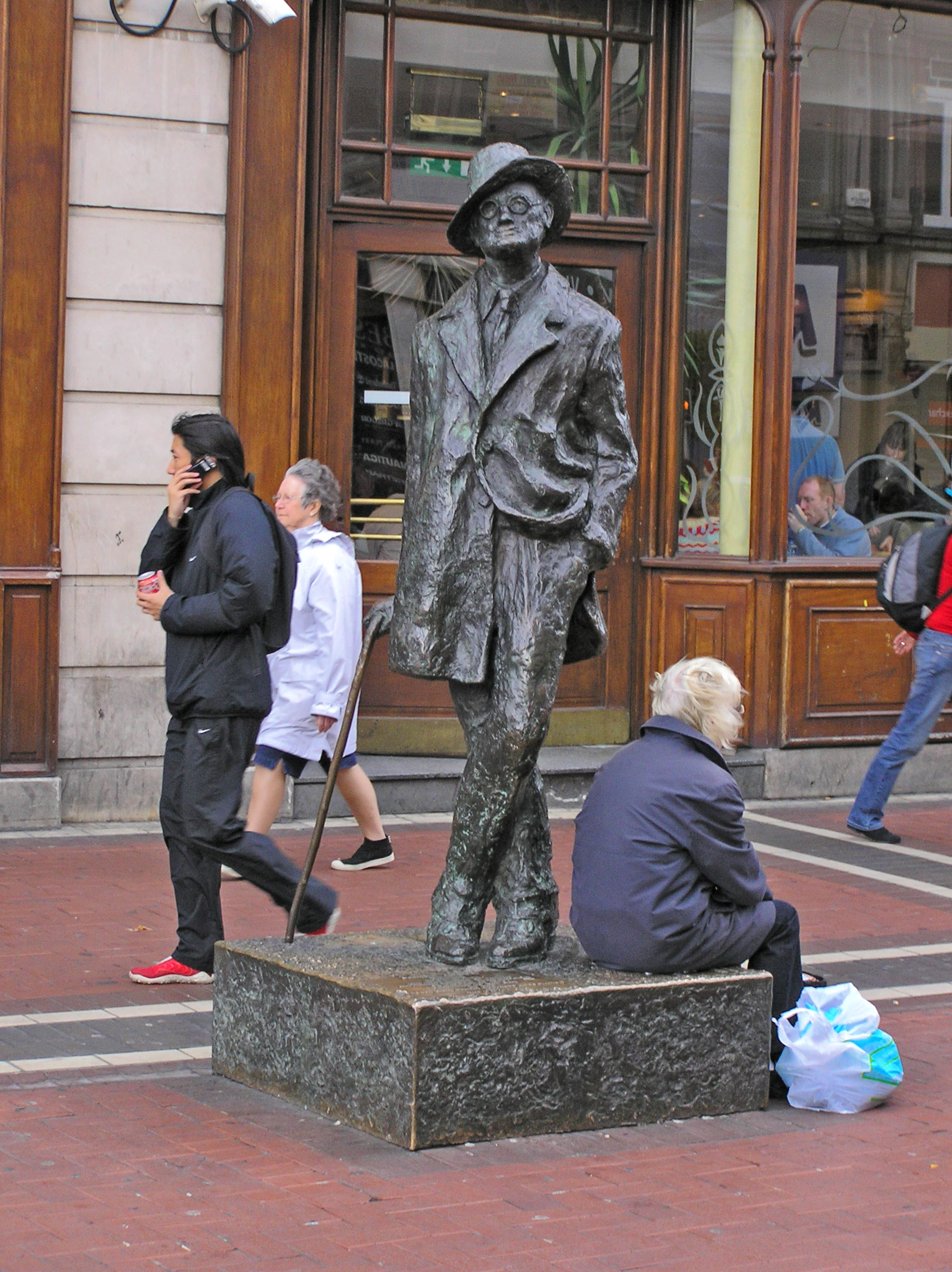
James Joyce
Ulysses is a 1922novel by James Joyce, first serialized in parts in the Americanjournal The Little Review from 1918 to 1920, and published in its entirety bySylvia Beach on February 2, 1922, in Paris. It is an important work of Modernist literature.
Ulysses chronicles the passage through Dublin by its main character, Leopold Bloom, during an ordinary day, June 16, 1904. The title alludes to the hero ofHomer's Odyssey (Latinized into Ulysses), and there are many parallels, both implicit and explicit, between the two works (e.g. the correlations between Leopold Bloom and Odysseus, Molly Bloom and Penelope, and Stephen Dedalusand Telemachus). June 16 is now celebrated by Joyce's fans worldwide asBloomsday.
Ulysses is a massive novel: 267,000 words in total from a vocabulary of 30,000 words, with most editions weighing in at between 644 to 1000 pages, and divided into 18 chapters, or "episodes" as they are referred to in most scholarly circles. The book has been the subject of much controversy and scrutiny, ranging from early obscenity trials to protracted textual "Joyce Wars". Today it is generally regarded as a masterwork in Modernist writing, celebrated for its groundbreaking stream-of-consciousness technique, highly experimental prose—full of puns, parodies, allusions—as well as for its rich characterizations and broad humour.
In 1999, the Modern Library ranked Ulysses first on a list of the 100 best novelsin English of the 20th century.
46. Franz Kafka, Bohemia, (1883-1924), The Complete Stories;
Kafka
Franz Kafka: The Complete Stories advertises itself as "the only available collection that brings together all of Kafka's stories." This is true as long as you remember that "stories" does not include any of his novels. But this volume is indeed a grand sampling of almost every one of Kafka's short stories and parables—from "The Metamorphosis" to "A Chinese Puzzle"—filling 512 pages!
As Joyce Carol Oates and others have already pointed out, Kafka was a master of the opening sentence:
"Someone must have been telling lies about Joseph K., for without having done anything wrong he was arrested one fine morning." (The Trial/Der Prozess)
"'It's a remarkable piece of apparatus,' said the officer to the explorer..." (In the Penal Colony/In der Strafkolonie)
"Honored members of the Academy! You have done me the honor of inviting me to give you an account of the life I formerly led as an ape." (A Report to an Academy/Ein Bericht an eine Akademie)
"As Gregor Samsa awoke one morning from uneasy dreams he found himself transformed in his bed into a gigantic insect." (The Metamorphosis/Die Verwandlung)But Kafka's skill as a writer (in German) certainly does not end with his opening sentences. They lead us on into the surreal, nightmarish, yet fascinating world of Kafka's mind. It is a mostly incomprehensible world in which few things make sense, but we are inevitably drawn to the similarities of that world to the "real" world—a world that can at times be equally incomprehensible and mystifying. In a truly Kafkaesque twist of fate, almost two decades after his death, all three of Kafka's sisters would perish in the monstrous world of the Nazi Holocaust. (See related photos on the Franz Kafka in Prague page.)
In addition to the thorough coverage of Kafka's shorter works, this volume includes several bonuses that I liked. These include a good bibliography, a chronology of Kafka's life, and notes on the works contained in The Complete Stories. I particularly enjoyed the chronology's biographical and literary details, as well as the brief but interesting notes on each of the included works. I feel this helps increase one's enjoyment and understanding of Kafka's stories. For instance, one note draws on Kafka's "Diaries" (not included in this volume) to illuminate the author's frequent and intense dislike of his own work: "Great antipathy to 'Metamorphosis.' Unreadable ending. Imperfect almost to its very marrow." Of course, this is a sentiment with which few readers of Kafka would ever agree.
The Complete Stories uses the skills of a variety of the better Kafka translators, including the team of Willa and Erwin Muir. I find the Muirs' translations of stories such as "The Metamorphosis" ("Die Verwandlung") superior to most other versions of Kafka in English. Kafka is not easy to translate (his style is deceptively simple and direct), but the Muirs succeed where others have been less successful.
47. Franz Kafka, Bohemia, (1883-1924), The Trial
The Trial (German Der Prozeß) is a novel by Franz Kafka about a character named Josef K., who awakens one morning and, for reasons never revealed, is arrested and subjected to the rigours of the judicial process for an unspecified crime.
According to Kafka's friend Max Brod, he never finished the work and gave the manuscript to Brod in 1920. After his death, Brod edited The Trial into what he felt was a coherent novel and had it published in 1925.
The Trial has been fillmed by the director Orson Welles, with Anthony Perkins(as Josef K.) and Romy Schneider. A more recent remake featured Kyle MacLachlan in the same role. In 1999 it was adapted for comics by the Italianartist Guido Crepax.
48. Franz Kafka, Bohemia, (1883-1924), The Castle Bohemia
49. Kalidasa, India, (c. 400), The Recognition of Sakuntala

Abhijñānaśākuntalam (The Recognition of Sakuntala) is a well-known Sanskritplay by Kalidasa. It is written in a mix of Sanskrit and the Maharashtri Prakrit, a dialect of Sanskrit. Its date is uncertain, but most scholars place Kalidasa in the period between the 1st and 4th centuries AD.

Không có nhận xét nào:
Đăng nhận xét